Georgians Ask Your Legislators to Affirm the Right to Float
02/22/2024 - by Kevin Colburn
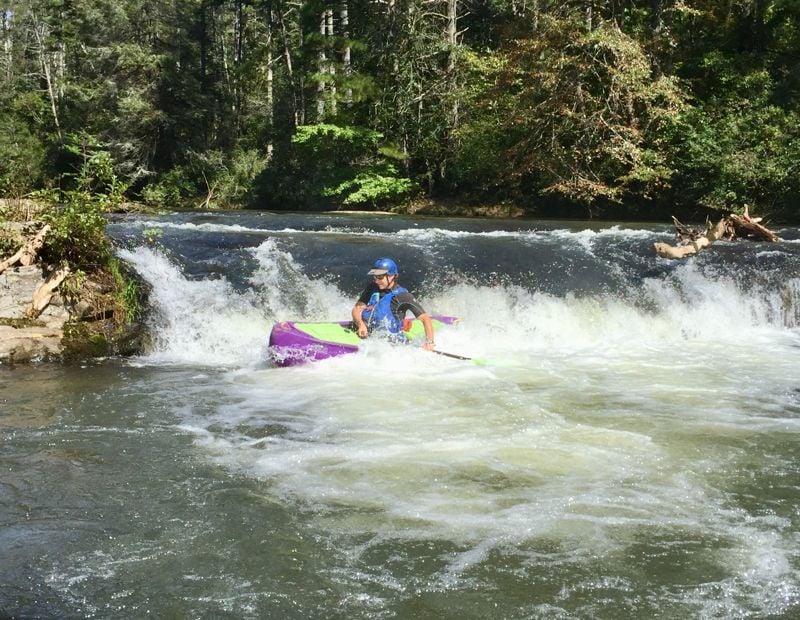
The Georgia General Assembly is considering legislation that would subtly shift the rights of the public to navigate and otherwise enjoy the state’s rivers. This is the second such bill in as many years, and more legislative action is anticipated on the topic. The legislature is hearing from special interest groups that seek exclusive private rights to Georgia’s rivers, and they also need to hear from the public that is concerned for their basic rights to paddle the state’s rivers. Learn more and take action in this article!
2024 Southeast Advanced Release Calendar Announced!
11/20/2023 - by Kevin Colburn
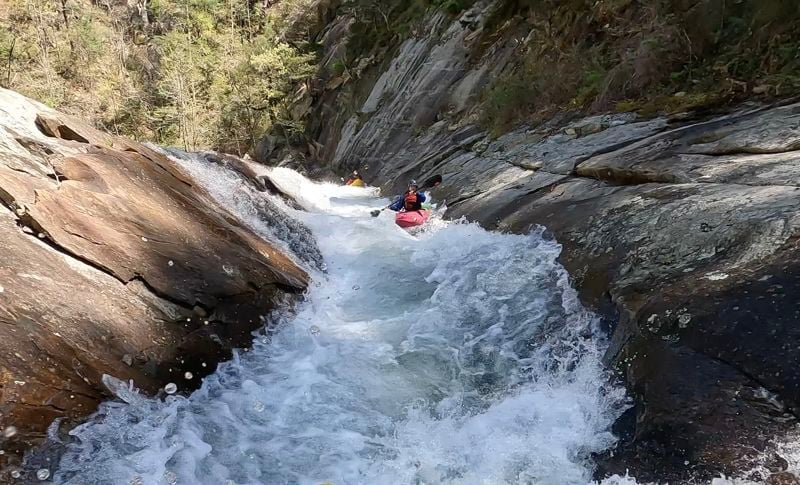
American Whitewater and our affiliate clubs have spent the past 25 years working to restore flows to incredible Southeastern rivers impacted by dams. A lot of our work has focused on releases and access on Class II and III rivers like the lower Nantahala, Tuckasegee, Hiwassee, and Catawba, but we also secured releases in some classic steeper reaches previously dewatered by hydroelectric diversions. Each year we meet with power companies and agencies to schedule future releases, review ongoing ecology studies, and discuss any issues with the release programs. We strive to create a schedule with minimal conflicts to maximize recreational value. In this article you'll find the 2024 dates for the Class IV/V Cheoah, Nantahala Cascades & Upper, West Fork Tuck, and Tallulah rivers.
A Close Look at Cheoah River Fatalities
06/29/2020 - by Charlie Walbridge
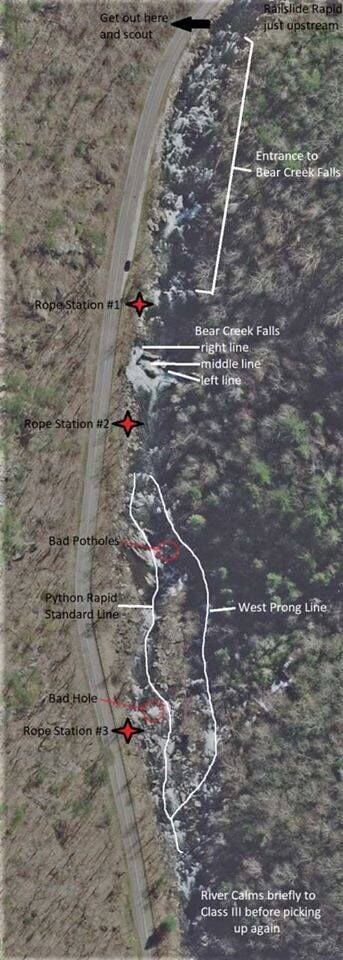
The recent death of Chris Clark at Python Rapid on North Carolina's Cheoah River is the third at this site in the last six years. In each case, the person who died was an expert paddler and their paddling partners did not see exactly what happened. Let's take a close look at the Cheoah below Bear Creek Falls and develop strategies for future runs. The river here is very fast and continuous. After a fast lead-in (Chaos), the river drops over Bear Creek Falls, a 12' drop. Below, most of the flow pushes toward the river right channel (Python). Ferrying over to the easier river left channel (the West Prong) requires careful boat control. Python itself contains several nasty holes and sieves, with a bad hole blocked by a boulder at the bottom. There is a good route through it, but paddlers need to plan their route carefully. Scouting is a good idea for first timers, although catching eddies and getting out is not going to be easy. Groups need to stay together.. The rapid is tough enough that you can't watch your buddy all the time, but you can be ready to help if needed. Click through for links to the accident reports, photos, and comments from expert Cheoah River paddlers. (Photo above by Boyd Ruppelt)
Great Smoky Mountains National Park Boating Beta
07/01/2009 - by Mark Singleton
Keep this number for assistance in the Great Smoky Mountains Nation Park - (865) 436-1230. This number connects to the Park Dispatch Office and should be used in non-emergency situations. For boaters who regularly paddle in the Park it is advisable to program the number in your cell phone.