AW's Stewardship Program
Our vision is that our nation’s remaining wild and free-flowing rivers stay that way, our developed rivers are restored to function and flourish, that the public has access to rivers for recreation, and that river enthusiasts are active and effective river advocates.
What We Seek To Achieve
Whitewater rivers face a range of threats from dams to water withdrawals to access closures. In pursuing our river stewardship goals, we aim to create the greatest possible benefits for whitewater rivers and enthusiasts. Our conservation and restoration work is infused with recreational knowledge and enthusiasm, and our recreation work is driven by a deep conservation ethic. We call this integrated approach to our mission river stewardship and pursue it in three tracks: Protect, Restore, and Enjoy.
The projects we select align with our mission and vision, have tangible and lasting beneficial outcomes, create good policy and have local support, are responsive to climate change, and benefit the rivers our communities love for current and future generations.
PROTECT
To protect rivers, we celebrate public lands, champion Wild and Scenic and other designations, defend rivers from dams and diversions, and advocate for clean water. We treasure wild rivers and celebrate the wildness inherent in all rivers. We believe that free-flowing rivers should stay that way.
RESTORE
To restore rivers, we negotiate new and improved flows at dams and diversions, and work toward dam removals where appropriate. We’ve proven that rivers are resilient and restoration works: often, just add water.
ENJOY
To help the public enjoy rivers, we defend the right to paddle rivers, secure areas for public access to rivers, share information on rivers, host events, and encourage sustainable use and safety on the water through education. We’ve found that sustainable access to rivers benefits individuals, communities, and rivers.

Stewardship News

2026 Advances Southeast Release Schedule Announced!
12/04/2025 - by Kevin Colburn
American Whitewater and our affiliate clubs have spent the past 25 years working to restore flows to incredible Southeastern rivers impacted by dams. A lot of our work has focused on releases and access on Class II and III rivers, but we also secured releases in some classic steeper reaches previously dewatered by hydroelectric diversions. Each year we meet with power companies and agencies to schedule future releases, review ongoing ecology studies, and discuss any issues with the release programs. We strive to create a schedule with minimal conflicts to maximize recreational value. Below are the 2026 dates for the Class IV/V Cheoah, Nantahala Cascades & Upper, West Fork Tuck, and Tallulah rivers. Also 2026 marks the fourth year of releases on the Great Falls of the Catawba! Thankfully, none of these rivers were significantly affected by Hurricane Helene. Enjoy these releases, big thanks to all the volunteers and agency staff that make these releases possible, be safe out there, and we appreciate your support of this work.

Success: Klamath River Access Sites Staying Open (OR/CA)
11/19/2025 - by Thomas O'Keefe
Two weeks ago, the states of Oregon and California unexpectedly announced the seasonal closure of three of the new Upper Klamath River access sites. Pioneer Park West, Moonshine Falls, and K’utárawáx·u were scheduled to close from November 20 through March 31 — a move that would have cut off direct access to the Big Bend Run and the K’íka·c’é·ki Canyon Run during the very season when flows are typically at their best and affected take-out access for the Keno and K’íka·c’é·ki Valley runs. Thanks to rapid engagement by American Whitewater, strong support from outfitters, and calls from many of you, both states have now reversed course. All three access sites will remain open this winter, with only short, weather-dependent closures if conditions genuinely warrant them. This is an important victory for the boating community and ensures that the public can safely reach and enjoy the newly undammed Klamath River during its prime winter and early spring season.

Senator Murray & Representative Randall Reintroduce Wild Olympics Bill (WA)
05/13/2025 - by Thomas O'Keefe
Today, U.S. Senator Patty Murray (D-WA) and U.S. Representative Emily Randall (D-WA-06) reintroduced the Wild Olympics Wilderness & Wild and Scenic Rivers Act, legislation that would permanently protect more than 126,500 acres of Olympic National Forest as wilderness and 19 rivers and their major tributaries—a total of 464 river miles—as Wild and Scenic Rivers. Designed through extensive community input to conserve ancient forests and pristine rivers, protect clean water and salmon habitat, and enhance outdoor recreation, the legislation would set aside the first new wilderness on Olympic National Forest in over four decades and the first-ever protected wild and scenic rivers on the Olympic Peninsula. With a strong foundation of overwhelming local support, the bill has made steady progress each successive Congress—passing the House with bipartisan support twice before and passing out of the Senate Energy and Natural Resources Committee last Congress for the first time in the bill’s history.
Take Action to Protect Water Quality in Colorado
04/28/2021 - by Kestrel Kunz
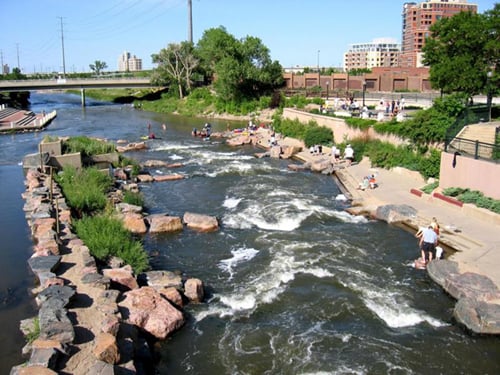
Colorado’s waters are at stake. From our high mountain streams to the backyard of urban communities, water quality is threatened state-wide. The Colorado Water Quality Control Commission has proposed a change to the antidegradation rule that would allow for more pollution into higher quality waters without review or justification. The proposed rule would go against the very premise of the Clean Water Act, which the Commission is tasked with implementing and overseeing in Colorado. Help us protect the antidegradation policy by signing on to this petition to the Water Quality Control Commission.
Train Operations in Eagle and Arkansas Corridors to Require Full Review (CO)
03/25/2021 - by Kestrel Kunz
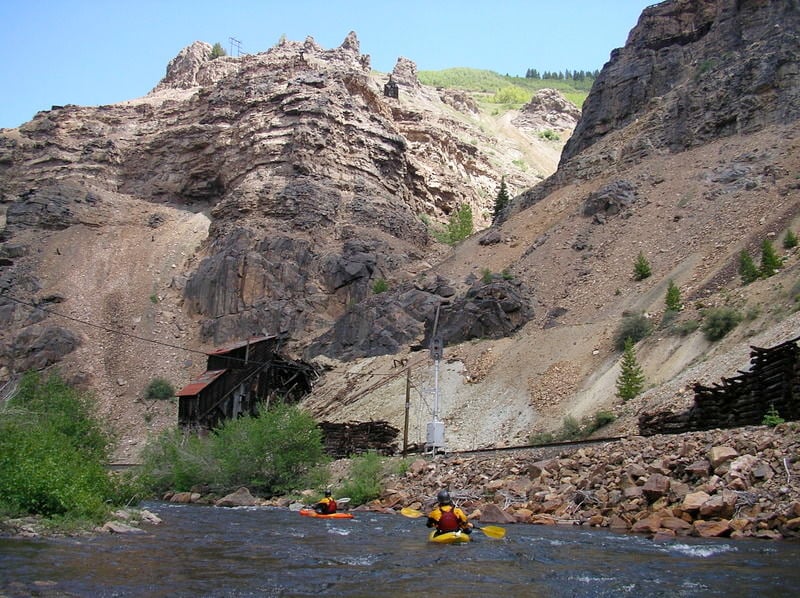
This morning, the federal Surface Transportation Board (STB) made a much-anticipated decision on the revival of the Tennessee Pass Rail Line - a 160-mile rail line that follows the Eagle and Arkansas Rivers between Sage and Parkdale, Colorado. The STB formally rejected Colorado, Midland and Pacific Railway’s (CMPR) request to be exempt from oversight and regulation of their proposed operation on the line, which would be leased under an agreement with Union Pacific. This decision comes nearly three months after CMPR filed a notice of exemption on December 31, 2020, as people were bringing in the new year.
Help Protect Crested Butte Area Rivers and Creeks under Wild and Scenic Act
02/26/2019 - by Kestrel Kunz
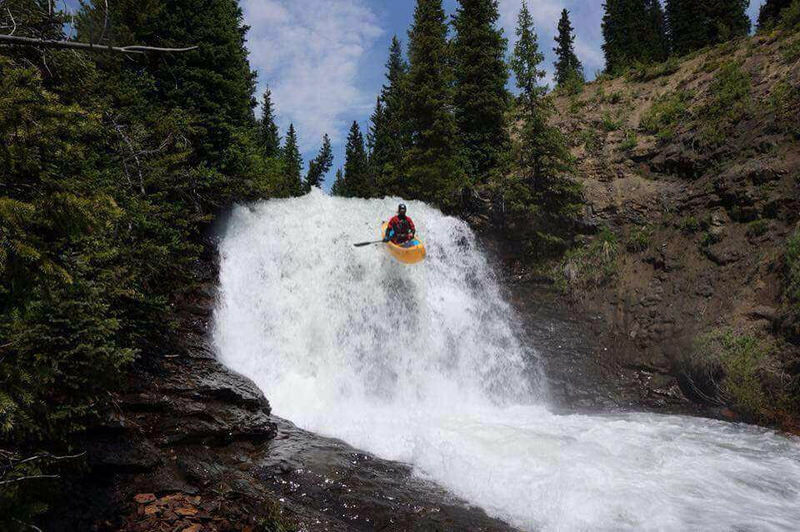
The Grand Mesa, Uncompahgre, and Gunnison National Forests (GMUG) are conducting a Wild and Scenic River Eligibility Evaluation as part of the current Forest Plan Revision process. While the Forest Service is mandated to conduct an Eligibility Study as part of the Plan Revision process, this opportunity only happens every 15-20 years and we need to ensure that the Study is comprehensive and robust. We need YOU to share your love and knowledge of these rivers with the Forest Service! We've put together an easy-to-use tool for you to submit comments here. Please consider personalizing your comments and take the time to review the Forest Service's Story Map of the Eligibility Evaluation.
Support Colorado River Access on Colorado Gives Day!
11/29/2018 - by Kestrel Kunz
Colorado Gives Day is on December 4 this year and is fast approaching! Go here to schedule your online donation to support American Whitewater's Colorado River Access Program. All donations made to American Whitewater on Colorado Gives Day (December 4) will be put towards our River Access Program in Colorado. American Whitewater works to improve river access and public safety throughout the state by working with landowners and managers, paddlers, law enforcement, and lawmakers to understand Colorado's river access laws and the ongoing threats to public safety. Thank you for your support!
AW Comments on Colorado Nat'l Forest Wilderness Process
09/05/2018 - by Kestrel Kunz
Today, September 5, marked the close of the public review process for the DRAFT Wilderness Evaluation Report. The Evaluation Phase is the second step of 4 different steps required in the assessment of lands that may be suitable for inclusion in the National Wilderness Preservation System (NWPS). American Whitewater thoroughly reviewed the DRAFT Wilderness Evaluation Report and submitted our comments to the Forest Service on September 4, 2018. Overall, we found that key paddling reaches throughout the GMUG area were greatly under-represented in the Polygon narratives and thus weren't acknowledged as contributing factors to the Polygon's respective Wilderness Ratings. We let the Forest Service know this, highlighting specific paddling reaches that should be added to each Polygon and which Polygons we believe should have a higher Wilderness Rating based on the high-quality recreation opportunities that each area has to offer.
Please stay tuned as we continue to report on the GMUG Land Management Revision Process and in the meantime you can learn more about the GMUG here. (Photo of Josh King by Nick Spitzer)
2018 Colorado Whitewater Events
04/02/2018 - by Kestrel Kunz
It's that time of year folks! Colorado Event Season is soon upon us. Whether you've been training all winter in preparation or whether you just enjoy a good show and boating with your friends, these classic Colorado river events are not to miss!
In addition to the many whitewater festivals that American Whitewater partners with in Colorado, we are excited to announce that AW is hosting Gore Fest again this year! We hope to see you at Rancho Del Rio on August 24 - 26. Stay tuned for more details on race registration, entertainment, and volunteer opportunities.
TAKE ACTION: Comment on the Arkansas Headwaters Recreation Area Management Plan
11/01/2017 - by Kestrel Kunz
ARKANSAS RIVER, Colo. - The Arkansas Headwaters Recreation Area (AHRA) is revising their Management Plan for the first time since 2001. The new Draft Plan was made publicly available in October and the AHRA is accepting public comments through November 10, 2017 (next week!). In order to design effective and productive comments, American Whitewater has thoroughly reviewed the Draft Plan, discussed the Plan with our local Affiliate Clubs, attended AHRA Public Open Houses, and reached out to key members of the local paddling community. To make it easy for you to SUBMIT YOUR COMMENTS, American Whitewater staff have compiled our key concerns and comments for your review.
A Successful River Cleanup on the St. Vrain (Lyons, CO)
06/07/2017 - by Kestrel Kunz
On Sunday, nearly 50 people gathered on the banks of the St. Vrain River to pick up trash from the water and the shoreline. We started the day off with Hotbox Roasters coffee and donuts, and a few words about River Stewardship – the common cause that brought us all together. We found bedframes, rusty nails, lawn chairs, car doors, plastic water bottles, candy wrappers, fast food containers, and it doesn’t stop there. Our findings are likely a combination of leftover debris from the floods, illegal waste dumping along the river, and built up trash from years of careless passers-by. Thank you to all those that came out for the river cleanup! American Whitewater depends on our affiliate clubs, members, and dedicated volunteers in order to tackle our many River Stewardship projects.
Green River Boat Passage Officially Open! - UT
04/06/2017 - by Kestrel Kunz
American Whitewater staff traveled to Green River, UT in late March to meet with private water users and state agencies, and to participate in the official opening of the new boat passage through the Green River Diversion (Tusher Dam). Completion of the boat passage has freed the Green River from its last in-stream obstruction between the Flaming Gorge Dam and the confluence with the Colorado River – over 400 floatable river miles through iconic canyons and historic landmarks. It has a been a long process, and our work isn’t over yet! As your boating representative, American Whitewater will continue to work closely with the dam operators and Utah’s Division of State Lands (FFSL) to ensure that the boat passage meets the needs of the public during its inaugural year.
New Report on Impact to San Miguel River From Proposed Reservoirs
01/09/2017 - by Evan Stafford
Colorado - American Whitewater has released a new study on whitewater recreation in the San Miguel River Basin. The Colorado Water Conservation Board (CWCB) requested that Montrose County consult with American Whitewater on recreational needs and future impacts for the San Miguel River. Montrose County acquired conditional water rights to the San Miguel River in hopes of building multiple new reservoirs on BLM land. American Whitewater worked with Montrose County’s agents to assess the impact its conditional storage proposals would have on existing recreational opportunities.
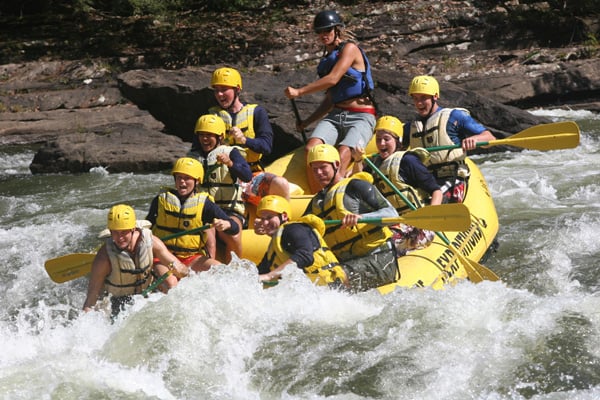
Avoiding Collisions on the Gauley River
09/21/2010 - by Charlie Walbridge
River outfitters and American Whitewater joined together decades ago to protect the Gauley River from hydro development. The success of these business enterprises were one of the key reasons that the river was protected as a National Recreation Area. But with success has come new challenges. Professional guides find the number of kayakers on the Upper Gauley overwhelming at times and kayakers also find the number of rafts intimidating. Regardless of any “right of way”, it’s everyone’s job to avoid crashes! Here’s what you can do to avoid collisions with commercial rafts.
River
Stewardship
Toolkit
A cornerstone of our outreach and education program designed to empower our volunteers is our
Stewardship Toolkit, an on-line resource built on a decade of AW institutional knowledge in
conservation, access, and safety issues. Each link below is a chapter containing a wealth of
information. These topics are constantly being updated and we invite additional
contributions.
Introduction
Protecting Rivers :
Using State and Federal Regulations