Stillaguamish, S. Fork
2 - Mallardy Creek to Verlot (Middle)(Silly Stilly)
January 11, 2026
| Reporter | Thomas O'Keefe |
| Gauge Reading | 6 ft at SF STILLAGUAMISH RIVER NEAR GRANITE FALLS, WA |
| Flow | Medium Runnable |
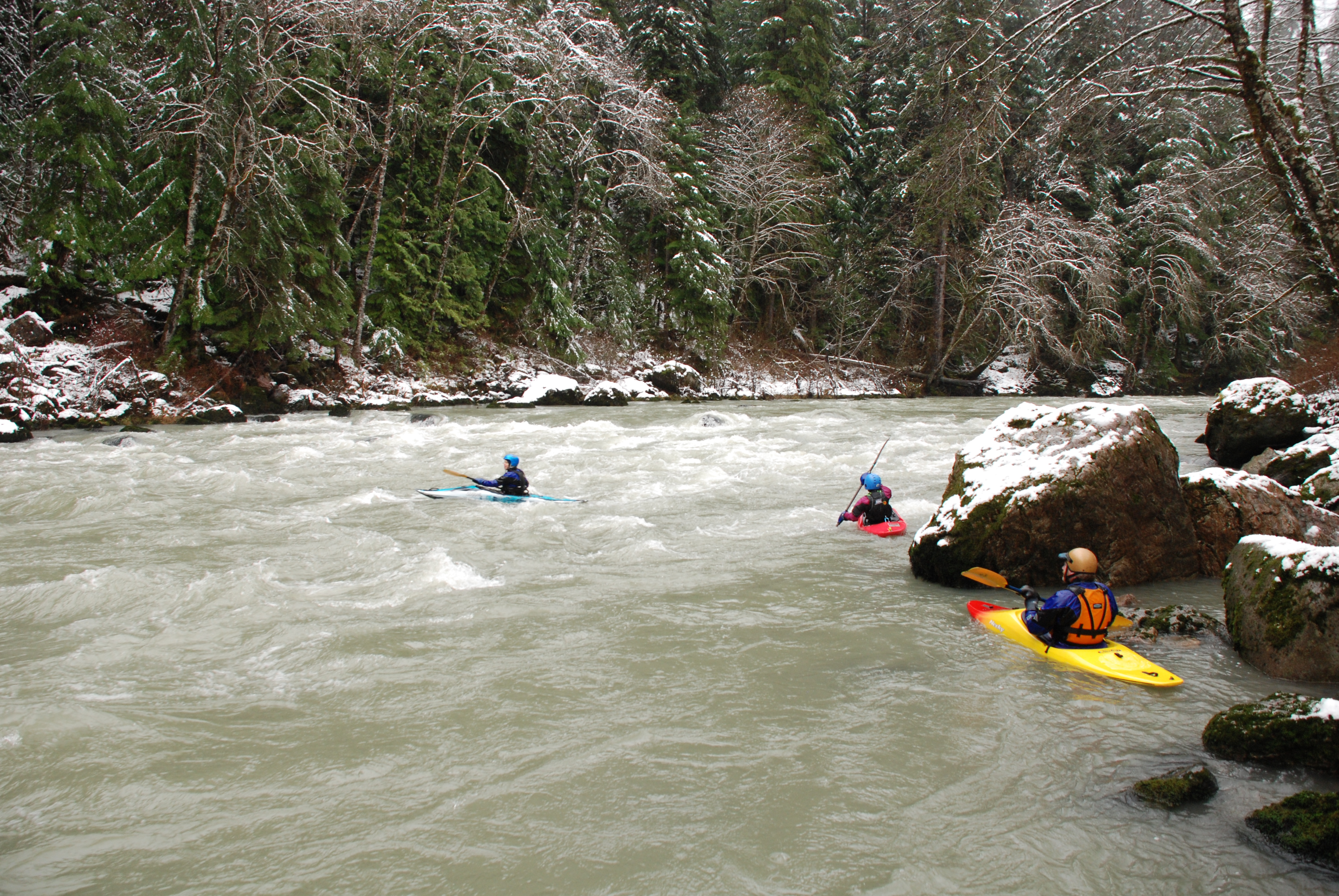
We kayaked the South Fork of the Stillaguamish River with a group of eight paddlers: seven kayaks and one inflatable kayak. The crew included Tom, Emma, Jennie, Mary, Kanako, Patrick, Bob, and Corey. Bill Petty stopped by while we were getting ready at the put-in and generously helped by shuttling one of the vehicles.
The weather was classic Pacific Northwest winter—overcast skies with a light mist in the air. It had rained overnight and the freezing level had risen, with more rain in the forecast. The steady rain held off through most of the run, only beginning in earnest once we reached the takeout.
We put in at Boardman Creek. Within just a few minutes of paddling, the first class III boulder gardens appeared. At this flow, the river was at an ideal level for this section: high enough to keep things moving, but low enough that boulders were visible and lines were well defined. The boulder gardens were straightforward to boat scout and offered continuous, enjoyable maneuvering with plenty of clean routes between exposed rocks.
Eventually we reached Wiley Creek Rapid, the largest rapid on the run. At this water level it remained solid class III. We had scouted it earlier from the road on the way to the put-in, and on the water the lines were clear and easy to identify by boat scouting. There were alternate routes through the rapid, all offering fun, well-defined moves. Downstream of Wiley Creek we continued through more lively boulder gardens, which made for some of the most enjoyable paddling of the day.
Given the recent flooding in the region last month, many paddlers have been wondering about post-flood river conditions. It was interesting to see the South Fork after those events, but we did not observe any major channel changes or new hazards that significantly affected this run. Aside from one recently fallen tree near the end of the trip that extended about three-quarters of the way across the river—highly visible and easy to avoid on the far left—wood in the channel was minimal. We saw a few isolated pieces, but nothing that posed a serious hazard or required unexpected portages.
We stopped for a quick snack break on a gravel bar on river right before continuing downstream past Gold Basin Campground. Along this section, a large engineered log retaining wall runs for a considerable distance on river right. We observed sediment-laden water emerging from the structure, and signs of recent high water erosion behind the log wall, raising questions about how well the structure is functioning.
Soon after, the river enters a stretch lined with private property, with several cabins on river left. A fun rapid appears as the river bends right along this cabin-lined section. We then approached the Mountain Loop Highway Bridge, where another enjoyable rapid sits just upstream of the crossing. At the bottom of this rapid, wood was protruding from the right bank. It was easy to spot and avoid, as long as paddlers stayed off the right wall and clear of the logs.
After passing under the bridge, there is another short, fun rapid. Shortly downstream we encountered the fallen tree noted earlier, extending most of the way across the river. It was in moving current but not in a rapid, highly visible, and easily avoided by passing far left.
Not long after, we reached the takeout. The campground where we exited was closed, but there was sufficient space near the entrance to park several cars close to the highway. From campsite 8, a small beach provides easy river access, and it’s only a short walk to the parking area. As we changed and packed up our gear, the rain finally arrived in earnest.
Despite the cold and wet conditions, it was a great day on the water. The flow was excellent, the rapids were well formed, and the group enjoyed a fun winter paddle on the South Fork Stillaguamish—an ideal way to embrace the Pacific Northwest rainy season.