Selway
1 - Paradise to Selway Falls
May 2, 2023
| Reporter | Thuja Plicata |
| Gauge Reading | 24000 cfs at SELWAY RIVER NR LOWELL ID |
| Flow | High Runnable |
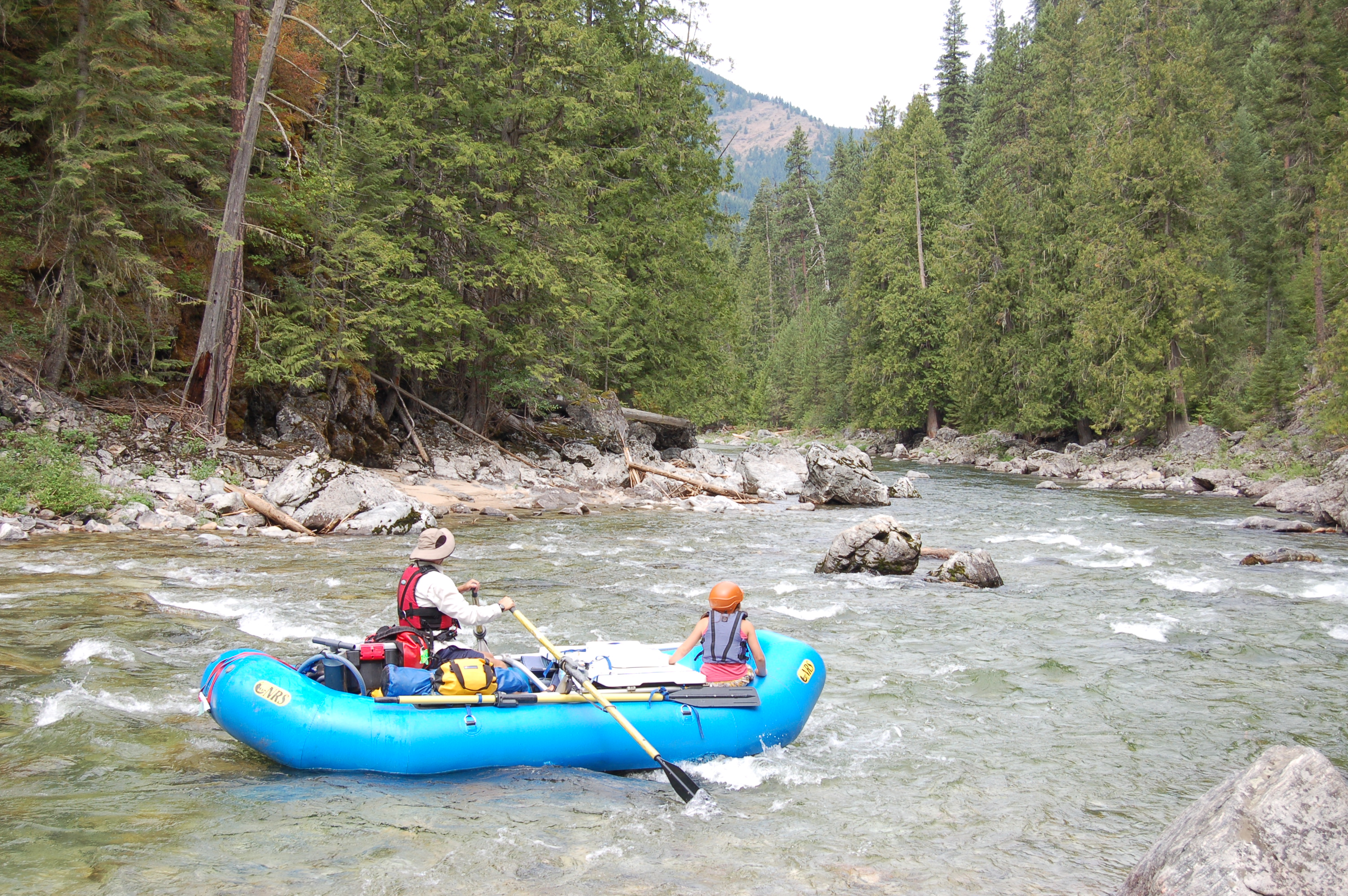
This report is specifically intended for rafters and focuses on high-flow conditions on the Selway River.
In my experience, the Paradise foot gauge is not a reliable indicator of true river flow, especially for rafters. Numerous significant tributaries enter the Selway below the gauge, dramatically affecting flow volume downstream. Additionally, there's widespread misinformation and exaggeration regarding foot gauge levels, which contributes to confusion.
The 'foot gauge' at paradise was also replaced in 2018, and now registers lower readings. This further complicates matters related to the foot gauges.
For a more accurate understanding of the river’s behavior—especially concerning the Moose Juice section at mile 27, which is by far the most challenging—the Lowell CFS (cubic feet per second) gauge provides a far more complete, consistent and useful measure.
At high flows, the Selway becomes significantly more hazardous. These conditions are often manageable for experienced kayakers, but for rafters, any swim at high water is extremely dangerous—posing life-threatening risks and severe challenges for recovery and rescue.
The river demonstrates distinct shifts in volatility at key flow thresholds:
A key hazard for rafters is the unpredictability of rising flows overnight. It is not uncommon for the Selway to rise from 10,000 to over 20,000 CFS in less than 24 hours. This has serious implications for those who scout “The Juice” the day before running it. Without current flow data, rafters can easily find themselves on a radically different and far more dangerous river than expected.
Before entering the canyon, river runners should posses a full memorized road map of this section, being able to know where they are and what is coming. It is critical to maintain awareness of location in the stretch in the event that you are unable to stop.
Please use extreme caution when considering a high-water run on the Selway. The dynamics of this river change drastically above 14,000 CFS, and the hazards scale up exponentially. The waves are erratic and irregular, enormous, oceanic - hard to compare if you haven't built up experience in these types of conditions. Recovery is often impossible, and the margin for error is razor-thin. This is not the same river you know at lower flows.
Stay safe so you can have fun.