Blackfoot
Trail Creek Bridge to Cedar Creek (near Aldridge)(Wolverine Canyon)
Apr 7, 2012
I have paddled this stretch several times in the last couple of years and would agree with what Davis wrote, class 4-5. If you don't know what that means than simply stay home. Greg's group did this run in 6 hours with no previous experience, that's not at all bad for a solid run like this.
I consider it one of the best runs in the area and contradicting what others have written I think this run is relatively clean. Yes there is some wood, but not very much considering what most class 5 gathers. Teller Tube is a very straight forward but committing rapid with some wood at the end where you wouldn't want to go even if it was wood free. There are dozens of good drops and only one mandatory walk, that's a rarity on this type of run. Also, it flows late season which is a huge bonus around here!
Important side note, I believe that this gauge was discontinued from USGS. This reading on the AW site is old and not accurate. You can call irrigation at 208-238-0586 for current flows. If somebody knows of a working internet gauge please post it.
Sep 3, 2007
I just paddled the Wolverine Canyon section of the Blackfoot for the first time yesterday. I read AW's write-up after the fact and would like to offer an additional warning. We padded the river at 550 cfs without incident, but it is a very dangerous and remote river. Neither of us had done it before, and it took nearly six hours to scout, run and portage when necessary. We portaged three times, and the rapid called Teller Tube was not one of them. There are numerous places to pin, broach and otherwise get in a lot of trouble. The Class V rapids are interspersed with very consistent and bony Class IV rapids that are not like what Idaho boaters are used to. They are creeky and rocky rapids. Even with thorough scouting I broached three times and pinned momentarily at least twice.
The combination of remoteness, poison ivy, rattle snakes and very demanding scouts and portages makes this river very dangerous. The rapids are steeper than anything on the North Fork Payette, although they may be a smidgen easier. But the consequences for ever coming out of your boat are severe.
Had we gone with a guide, I imagine it would have been a smoother day. But even with a guide there are many places where scouting is crucial. This is a unique run in Idaho. It's worth doing, but be prepared, and, as Gordo pointed out, don't go in there unless you've got your A game. It's not only difficult whitewater, but it's a physically-demanding day.
Oct 19, 1997
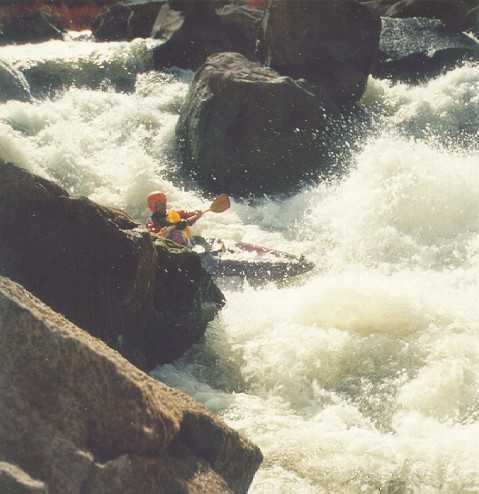
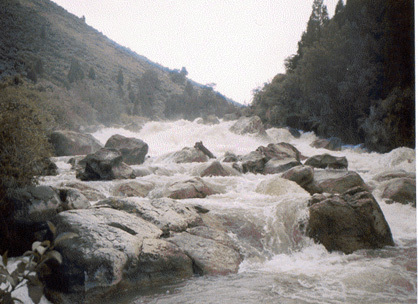
Last rapid before the sieve. At higher water it looks a lot like El Horrendo on the Russell Fork, but with less margin for error and a nasty drop downstream.
Jan 1, 1900
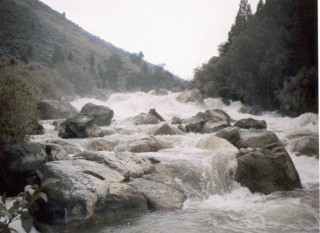
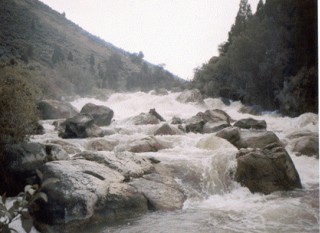
This was the fourth portage of the day. It has supposedly been run.
Jan 1, 1900
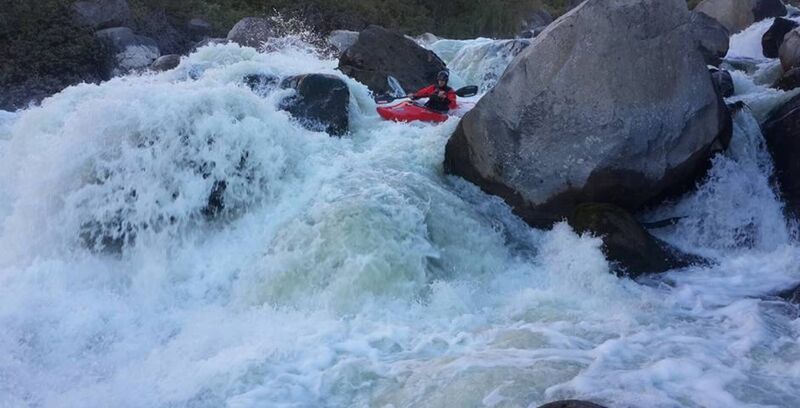
River Left sneak of portage rapid.
Jan 1, 1900
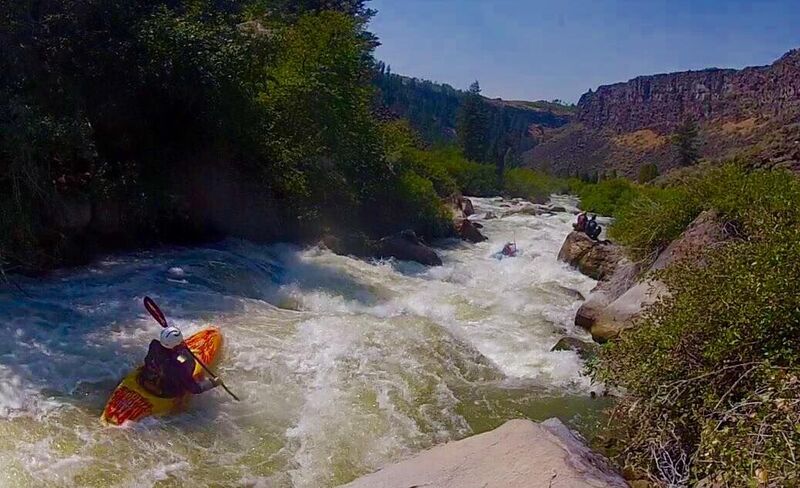
TellerTeague
Jan 1, 1900
This was the first portage of the day.
This was the fourth portage of the day. It has supposedly been run.