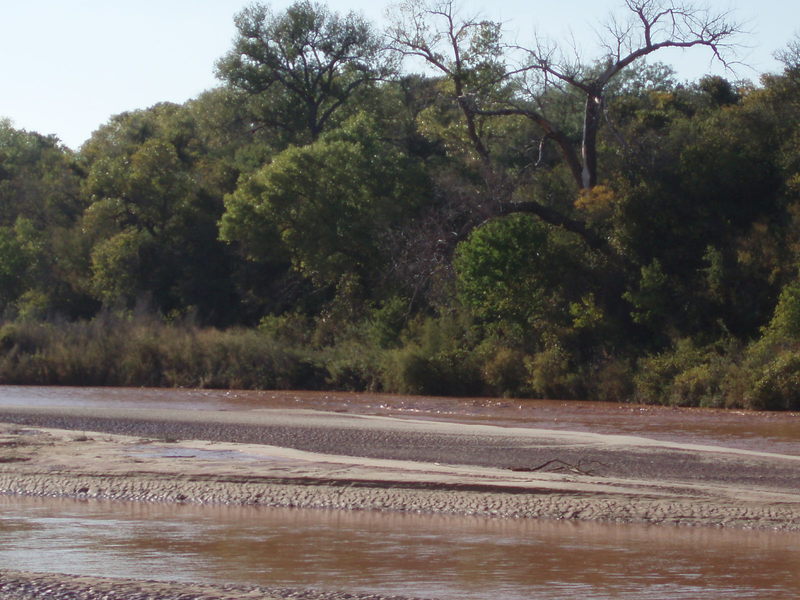
Canadian River
US 287 Bridge (PnP)
| Difficulty | II |
| Length | 0.18 mi |
| Avg Gradient | n/a |
| Gauge | Canadian Rv Nr Amarillo, Tx |
| Flow Rate as of 43 minutes | 15 cfsbelow recommended |
| Reach Info Last Updated | June 8, 2022 |
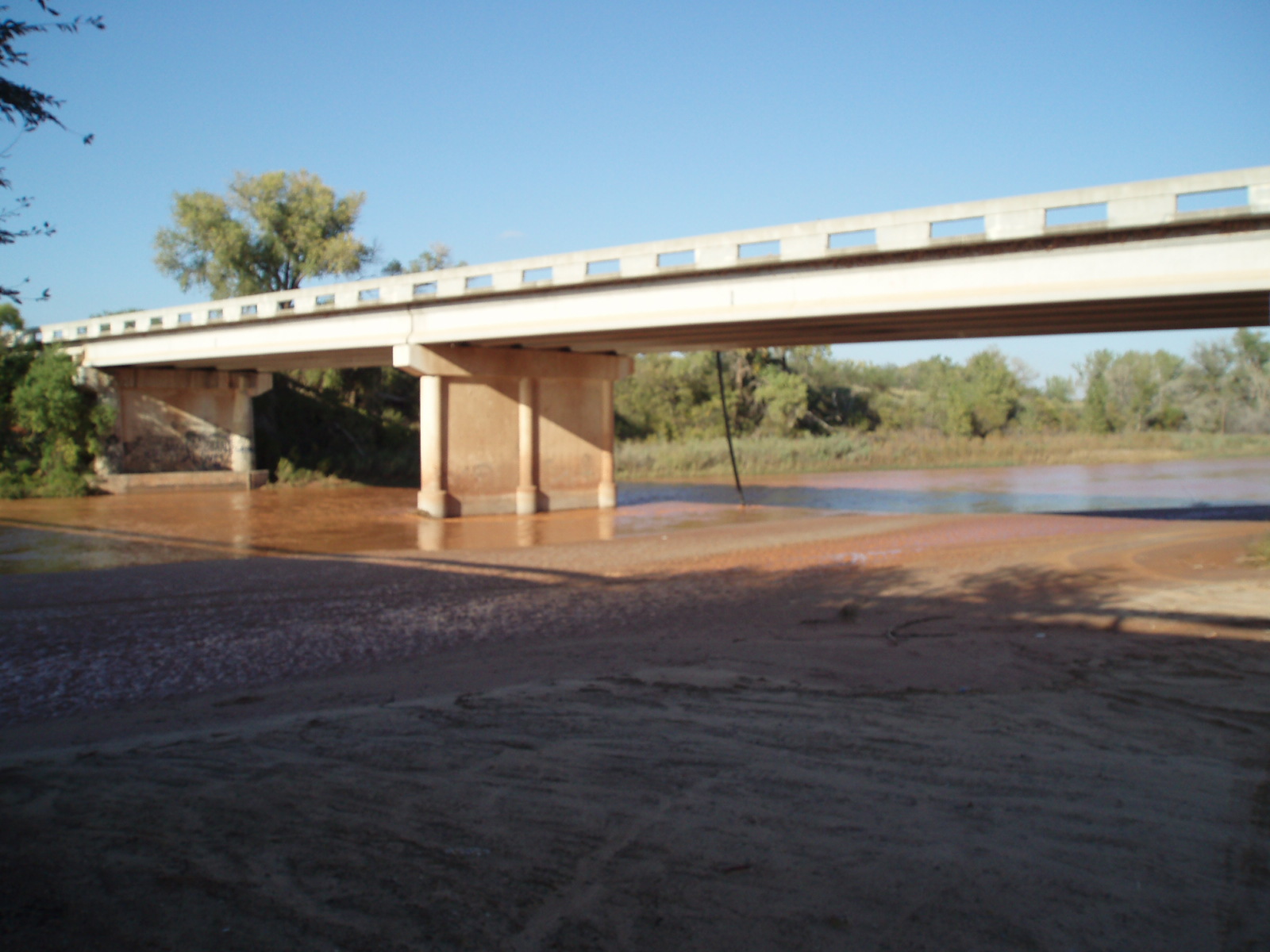
Just upstream of the US 287 bridge, a high-water channel joins the main river channel. The high-water channel has created a sandbar that extends into the main channel, and the edge of this sandbar creates an eddy fence that can be utilized for stern squirts and bow stalls. The feature is accessed from river left.
The US 287 bridge has two concrete supports. Both bridge supports create eddy fences that are good for stern squirts, bow stalls and other eddyline-related playboating activities. The river right side of the downstream support is not very friendly, due to the USGS gauge equipment. These eddy fences are good at 900 cfs and above. Play may be possible at lower flows.
At 3000 cfs, compression waves form adjacent to the downstream bridge support. The first wave is breaking and surfable. About 50 yards downstream of bridge is another set of waves that may be surfable on the fly.
At 3000 cfs and above, the river is bank full, creating few eddies, and those eddies that exist are not well-formed.
At 900 cfs and above, the water is very silty, like boating in chocolate milk.
Feb 10, 2021
All boaters should be aware that the 'stage' reading ('gauge height') on official gauges (USGS, NOAA, etc) is never based on the actual depth of water in the river (since obviously depth varies across the river as well as up and down the river). Stage is always based on some (usually not specifically river-related) geographical 'marker'. Thus (as on this river/gauge), a 1' reading may mean a totally dry riverbed, whereas on some other river a 1' reading could mean quite considerable flow. (A 12.09' reading on W Fk Trinity Rv at Beach St, Ft Worth is a dry riverbed!) This is why (whenever possible) boaters should always use the 'Discharge (CFS)' readings and ignore the stage/gauge-height readings. Thus (regarding the comment below), a reading of 4' really means a reading of around 1300 cfs.
Aug 10, 2013
The USGS gage as configured in 2012 reads at least 1 foot of wet mud. So a reading of 2 feet means there is maybe a foot of water at the deepest part under the bridge. The earlier stated lower limit is probably accurate.
For play on the eddy lines a minimum flow closer to 4 feet is best.