
Chattooga Headwaters (NC)
American Whitewater Chattooga Project
Summary
The Chattooga River, which starts in Western North Carolina and flows south to form the border between Georgia and South Carolina, was designated a Wild and Scenic River in 1974. Two years later the United States Forest Service made a decision to prevent boating on the uppermost 21 miles of the river without cause. American Whitewater worked from 1995 to 2012 to see the prohibition lifted through administrative appeals and federal court challenges. The culmination of these efforts was a 2012 Forest Service decision ease the restrictions. Since that time the remaining seasonal, flow, and geographical restrictions have proven unnecessary, but remain in place.
Forest Service Process
American Whitewater appealed the 2004 forest plan for the Sumter National Forest (SNF) that renewed the boating ban on the Wild and Scenic upper Chattooga River. In April of 2005 the Washington Office of the USFS agreed with AW that there was no basis for a ban on boating or any limits to any users of the forest. The Washington Office gave the Sumter National Forest 2 years to carry out a User Capacity Analysis and reach a new decision on the fair and equitable management of all uses in the Chattooga Corridor. The Forest Service slowly began crafting their arguments against paddling, but refused to allow paddling to occur or to collect any relevant data on visitor numbers, activities, or opinions. Eventually they settled on the idea that paddlers would conflict with other visitors, and to avoid those conflicts paddling should be banned (and other uses allowed in unlimited numbers). They failed to document a single conflict between paddlers and other visitors on the upper Chattooga or any similar river. They reached and promptly withdrew a decision to severely limit paddling in 2009 before releasing their final 2012 decision that imposes the harshest limits on paddling in the entire Forest Service system, while imposing no direct limits on other similar visitors. Since use was partially restored monitoring has shown that paddling use is extremely small and isolated and causes no conflicts or resource damage, and that the limits are unnecessary.
Paddlers' Litigation Against the Forest Service

Conservation-oriented paddlers filed suit in October of 2009 to restore the public’s ability to paddle the headwaters of the 52-mile Wild and Scenic Chattooga River. The Plaintiffs in the lawsuit include American Whitewater, American Canoe Association, Atlanta Whitewater Club, Foothills Paddling Club, Georgia Canoeing Association, Western Carolina Paddlers, and three individuals. The kayakers and canoeists are being represented on a pro bono basis by the law firms of Jackson Lewis and Nelson Galbreath, and long benefited from representation by Patton Boggs. On December 2, 2010 United States District Judge J. Michelle Childs issued a partial decision regarding the management of the Wild and Scenic upper Chattooga River, located in North Carolina, South Carolina, and Georgia. The decision follows a hearing held in October. The decision denied the US Forest Service's motion to dismiss the case against them. The decision also denied a preliminary injunction request that would have granted paddlers the ability to float the Upper Chattooga immediately and throughout the judicial process. With conservation-oriented paddlers' case deemed ripe and valid for judicial review, the case proceeded to trial. Our case was then transferred to a new judge who ruled in favor of the Forest Service. The paddling plaintiffs appealed this decision to the 4th Circuit and were unsuccessful in a 2014 decision. With this said, litigation played an essential role in raising important issues and shifting the management of the river in a good direction.
Overflow Creek
A group calling themselves Friends of the Upper Chattooga wrote a letter in 2006 formally requesting that Overflow Creek, a tributary to the Chattooga River, be immediately closed to boating by the USFS. The USFS denied the request, and American Whitewater followed up with adetailed analysis in support of the USFS position that Overflow is in fact open to paddlers. The request came from groups like the NC, SC, and GA chapters of Trout Unlimited and the Chattooga Conservancy.
Upper Chattooga Timeline
| Timeline of Critical Actions | |
|---|---|
| 1971: | Local USFS personnel conducted a study of the Chattooga’s suitability for protection under the Wild and Scenic Rivers Act. The Study recommended that Congress include all sections of the Chattooga River in the Wild and Scenic Rivers System, based in large part on the Chattooga’s outstanding recreation opportunities—specifically whitewater boating on the Headwaters Section. |
| 1974: | Congress in 1974 included the Chattooga among the first rivers protected by the WSRA. The congressional intent was clearly to protect the river for the public to enjoy it in boats. |
| 1976: | The first official decision to ban boating above Highway 28 was made in connection with the Chattooga Wild and Scenic River Classification, Boundaries, and Development Plan. No analysis or support was included in the plan in connection with the ban. The ban was made arbitrarily, outside of an open National Environmental Policy Act-type process, without public input, and in direct contradiction to the Study produced by the Sumter National Forest just five years earlier to support designation of the Chattooga as a Wild and Scenic River. |
| 1985: | The ban was re-instituted in connection with a new Sumter National Forest Land and Resource Management Plan. In contrast to the 1976 ban where “public safety” was the stated justification, the 1985 floating ban stated that protection of “quality trout fishing” necessitated denying boaters access to the Headwaters. As with the 1976 ban, no supporting documentation or research was provided (or presumably considered) in connection with the decision. |
| 1990's: | Paddlers send hundreds if not thousands of letters to the USFS requesting access to the headwaters, as AW and ACA initiate talks with the USFS on the topic. |
| July 2001: | USFS proposed Amendment 14 to the 1985 forest plan. AW submitted scoping comments on proposed Amendment 14 asking that the scope of Amendment 14 expand to include boating above Highway 28. Forest Service refuses to consider the issue of boating access on the upper Chattooga despite significant requests from the public to do so. |
| Feb. 2002: | AW filed a Freedom of Information Act request for all information pertaining to management and closure of the river to boating above Highway 28 in 1976. AW reviewed thousands of pages of documents received under this FOIA request and found no evidence of conflicts, analysis, or any other documentation supporting the original river closure. |
| June 2002: | AW submitted official comments to Amendment 14. AW requested boating be restored above Highway 28. |
| Aug. 2002: | AW representatives met with USFS planning team in Columbia, requesting that the new Land and Resource Management Plan process address the boating ban. |
| Sep. 2002: | Forest Service issues Record Of Decision on Amendment 14. |
| Mar. 2003: | The USFS issues their Draft Environmental Impact Statement for their new Land and Resources Management Plan, which includes the first ever “analysis” of the boating ban. The Environmental Impact Statement contained only discussion of the issue and no data or justifications for the ban. You can read this “analysis” in Appendix H of the Sumter National Forest Land and Resources Management Plan |
| July 2003: | AW's Comments on the Land and Resources Management Plan. Our comments point out that in fact the USFS has offered no adequate justification for the boating ban - but merely their opinion that paddling should be forbidden. We also point out repeatedly that the ban is itself illegal. |
| Jan. 2004: | Decison on Land and Resources Management Plan - including ban. The USFS did not adopt American Whitewater's comments and went ahead with the boating ban as proposed in the Environmental Impact Statement. |
| April 2004: | AW Pre-Appeal Synopsis American Whitewater announces that it will appeal the Land and Resources Management Plan. |
| April 2004: | American Whitewater's Appeal of the Boating Ban in the LRMP American Whitewater and pro-bono legal team from Patton Boggs appeal the January 2004 record of decision to the national US Forest Service office in Washington DC. The appeal asserted that there was no basis in the record for the ban, and that it was in violation of the Wildernes Act, the Wild and Scenic Rivers Act, the National Environmental Policy Act, and several other federal laws. |
| April 2005: | USFS Appeal Decision The Chief of the US Forest Service, in reaction to AW's appeal, agrees that no basis for the ban exists and that it violates the Wilderness Act and the Wild and Scenic Rivers Act, yet the ban remains in effect for at least 2-4 years while a study is implemented to determine the user capacity of the Chattooga. |
| Fall 2005 - Spring 2006: | The user capacity analysis falters with delays, communication breakdowns, and inherently flawed study designs. Boating remains banned - regardless of determination of no basis for the ban. |
| April 2006: | AW's Final Request for Relief American Whitewater in a final attempt to avoid litigation requested intervention from the US Forest Service Chief to lift the boating ban, honoring the Wild and Scenic Rivers Act. |
| May 18, 2006: | American Whitewater with help from its pro-bono legal team made up of Patton-Boggs LLP and Alston & Bird LLP filed suit in federal court to restore the public ability to float the headwaters region of the Chattooga River. Joining American Whitewater as plaintiffs in the suit are The American Canoe Association, Georgia Canoeing Association, Atlanta Whitewater Club, Western Carolina Paddlers, and the Foothills Paddling Club. |
| January 5-6, 2007 | The first legal descent of the upper Wild and Scenic Chattooga River in over 30 years. A team of kayakers and canoeists took two days to explore the river, traversing countless rapids and small waterfalls as they traveled through a remote and beautiful valley. Learn more about their experiences. Watch the video |
| February 8, 2007: | American Whitewater, The American Canoe Association, Georgia Canoeing Association, Atlanta Whitewater Club, Western Carolina Paddlers, and the Foothills Paddling Club withdrew their appeal of a federal court decision involving canoeing and kayaking access on the Upper Chattooga Wild and Scenic River in North Carolina, South Carolina and Georgia. |
| April 2007: | Deadline for final decision of User Capacity Analysis set in Forest Service Chief’s Appeal Decision passes |
| June 2007: | Integrated Final Report issued as basis to begin developing preferred alternative in Environmental Assessment, based on a suite of individual reports. AW files comments on each report. Reports were never corrected or modified based on any public comment. |
| June 2007: | AW makes efforts to reach out to the local TU chapters and their flat refusal to discuss the matter with us. Note that we have been told on a number of occasions by leaders of the angling community that they were sure the agency would keep the river closed and therefore there was no need to talk from their point of view. |
| March 2008: | Large Woody Debris report issued without notifying stakeholders of the process or allowing input or participation. |
| July 2008: | Pre-decisional Draft Environmental Assessment is released that selects Alternative 4 which severely limits boating without justification while placing no limits on other user groups. Several reaches would remain completely banned under Alternative 4, and not a single alternative was equitable or addressed all uses. |
| August 2008: | AW issues comments on draft EA. Comments included previous comments on components of Integrated Report that were not incorporated into draft EA. |
| October-December 2008: | Publicly stated dates for issuing decision pass. Mid-December the Forest Service announces the decision will not be released until “next year” at some unspecified time |
| August 25, 2009: | USFS issues new decision nearly or totally banning boating on various sub-reaches |
| October 2009: | Boating Opponents appeal near total boating ban. A group calling itself Friends of the Upper Chattooga appeal USFS decision (10/1/2009), as well as Mike Bamford (10/15/2009), Georgia Forest Watch (10/16/2009), and the Chattooga Conservancy (10/17/2009) |
| October 14, 2009: | Conservation-oriented paddlers sue the USFS over boating ban in Federal Court. View press release |
| October 19, 2009: | Conservation-oriented paddlers appeal near total boating ban |
| October 20, 2009: | Georgia Forest Watch asks USFS to “stay” the decision that would have granted a few days of paddling on a small portion of the Upper Chattooga |
| October 25, 2009: | USFS grants GFW stay, totally banning boating for 09/10 winter |
| December 21, 2009: | USFS withdraws their August 25 decision and all supporting analysis, and cancels all appeals |
| December 9, 2010: | USFS “re-initiates” their NEPA analysis |
| July 15, 2011: | USFS publishes a new Draft Environmental Assessment containing most or all the errors of past efforts. |
| August 30, 2011: | AW and other conservation-oriented paddlers file comments in opposition of the Draft EA. |
| 2012: | USFS Decision released |
| 2012: | Limited paddling restored |
| 2014: | Court case allows 2012 Decision to continue |
| 2014-2019: | Trail enhancements and monitoring occur |
Forest Service Supports Chattooga Trails (NC/SC/GA)
05/20/2015 - by Kevin Colburn
The Forest Service released their decision yesterday to formalize roughly 1.5 miles of existing undesignated trails and build less than 1000 feet of new trails to improve access to the Upper Chattooga River for all visitors. This step is well within their normal range of management actions and begins the process of bringing the trail system in the river corridor up to modern standards.
Comment Opportunity on Upper Chattooga Access
10/28/2014 - by Kevin Colburn
The Forest Service is seeking comments on their Environmental Assessment and proposal to upgrade and designate the trails and access areas that paddlers and others use to access the Wild and Scenic Upper Chattooga River. Comments are due by midnight, November 7, 2014. Your comments can help encourage high quality and sustainable hiking and paddling opportunities, and help clarify that no permit should be requied to paddle the Chattooga River upstream of Green Creek.
Chattooga Court Hearing Marks Progress for Paddlers
12/06/2012 - by Kevin Colburn
Yesterday a hearing was held in US District Court in South Carolina regarding the Forest Service's illegal bans and severe limits on paddling 21 miles of the Wild and Scenic upper Chattooga River. The Judge ruled in favor of conservation-oriented paddlers and charted a schedule to resolve the case early next year.
Chattooga USFS Consideration Done – River to Partially Open This Winter
08/23/2012 - by Kevin Colburn
A decision made earlier this month by the Washington Office of the US Forest Service officially ends the agency’s consideration of recreational management on the Wild and Scenic Upper Chattooga River. The decision marks the final Agency green light allowing the public to paddle a 15-mile portion of the Upper Chattooga River this winter for the first time in 36 years!
AW Responds to Chattooga Farmstead Proposal
06/13/2012 - by Kevin Colburn
In the midst of the controversial paddling ban and capacity consideration on the Wild and Scenic upper Chattooga River, the Forest Service is proposing to jointly develop a “farmstead” on the banks of the disputed section of river with a private non-profit partner organization. This proposed new use of the Wild and Scenic River Corridor, in a reach heavily stocked with non-native trout and deemed to have zero capacity to support floating, is raising eyebrows and drawing comments from many Chattooga River stakeholders.
Chattooga River Update - Some Boating Possibly Allowed Soon
03/16/2012 - by Kevin Colburn
It has been a big week for the management of the Chattooga River. The USFS released plans to allow paddling on a portion of the river beginning as early as this weekend if a laundry list of conditions are met. Conservation-oriented paddlers appealed the new decision that unlawfully limits paddling, and anti-paddling groups may request a stay in the coming days that if granted would prevent paddling. The mismanagement of the Chattooga is also likely to go to trial by year end.

Court Sides with Paddlers on Several Chattooga Issues
02/23/2012 - by Kevin Colburn
Two federal court decisions issued in recent days favor conservation-oriented paddlers and their efforts to require fair, legal, and protective management of the Wild and Scenic Upper Chattooga River. AW believes that the recent decisions by the court respect the interests of everyone involved. The decisions also represent another step towards restoration of paddlers’ long tradition of floating the Chattooga River.
Forest Service Proposes More Boating on Upper Chattooga
01/31/2012 - by Kevin Colburn
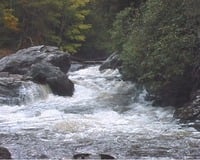
Today, the US Forest Service released their newest proposal regarding how to manage recreation on the Wild and Scenic Upper Chattooga River, where they currently maintain a controversial ban on paddling. The proposal would allow more paddling than has been proposed by the Forest Service in prior proposals as soon as March of this year. However, like previous proposals, the new proposal would limit whitewater paddling by stream reach, season, and flow, while imposing no such limits on all other similar visitors.
Conservation-Oriented Paddlers File Comments On Upper Chattooga
08/31/2011 - by Kevin Colburn
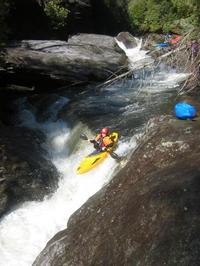
Yesterday, national and regional conservation-oriented paddling organizations submitted comments on the US Forest Service’s 489-page Environmental Assessment (EA) regarding recreation on the Wild and Scenic Upper Chattooga River. Also joining the comments were three individuals that enjoyed paddling the river prior to the controversial 1976 paddling ban.
Call for Chattooga River Comments
07/29/2011 - by Kevin Colburn
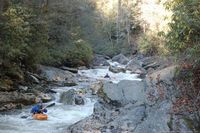
The Forest Service recently published a 500-page manifesto aimed at continuing the 35 year old ban on paddling the upper Chattooga. If you care about being able to enjoy rivers flowing through public lands, we ask that you submit a comment regarding the upper Chattooga River, and to call your political representative before the August 30, 2011 deadline.
New Chattooga Comment Opportunity and Video
12/20/2010 - by Kevin Colburn
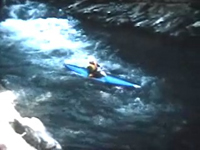
The US Forest Service has announced yet another 45 day comment period regarding paddling on the
Upper Chattooga River (NC/SC/GA) and we encourage paddlers to read the USFS scoping letter and
offer any comments you may have. Also, as a special holiday treat we are pleased to bring
you some rare footage of paddling the Chattooga headwaters prior to the 1976 paddling ban.
Paddlers Succeed in Chattooga Hearing - Case Moves Ahead!
12/04/2010 - by Kevin Colburn
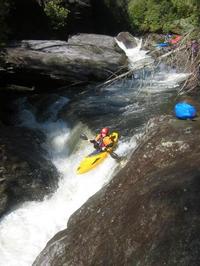
On December 2, 2010 United States District Judge J. Michelle Childs issued a decision regarding the mis-management of the Wild and Scenic upper Chattooga River. The decision confirms that conservation-oriented paddlers have a ripe and valid case against the US Forest Service, and the case will now proceed to trial.
Paddlers Get Their Day In Court on Chattooga
10/14/2010 - by Kevin Colburn
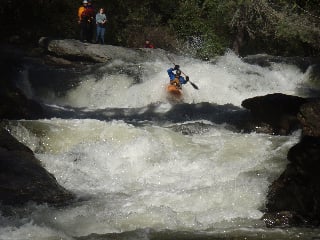
Yesterday, conservation-oriented paddlers presented their case against the US Forest Service regarding the agency's illegal paddling ban on 21 miles of the Wild and Scenic Chattooga River in a federal district court hearing. The judge heard roughly four hours of arguments and testimony, and stated that she would issue a decision at a later date.
Forest Service Announces More Chattooga Delays
06/08/2010 - by Kevin Colburn
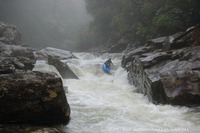
The USFS announced today that they will further delay reaching a new decision on how to manage recreation on the Upper Chattooga. A 2009 decision was withdrawn shortly after its release, and the agency stated a new decision would be released early in the spring of 2010.
USFS Withdraws Chattooga Decisions and Analyses
12/22/2009 - by Kevin Colburn
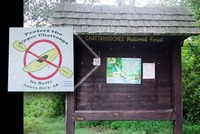
Yesterday the US Forest Service “voluntarily withdrew” their decisions and analysis regarding their illegal ban on paddling the Wild and Scenic Upper Chattooga River. The decisions and analysis were under intense scrutiny in the administrative appeals process, and are currently being challenged in Federal Court. The step is just the most recent in 14 years of avoidance tactics employed by local decision-makers in the agency, and will create massive additional burdens for public participants in the process.
USFS Decides No Upper Chattooga Boating This Winter
10/30/2009 - by Kevin Colburn
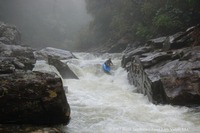
Earlier this week the US Forest Service cancelled their plans to allow a paltry six days of paddling on one small section of the upper Chattooga River (NC/SC/GA) this winter. As it has been for 33 years, the entire Upper Chattooga River now remains banned to all canoeing and kayaking, while all other existing uses have no limits. Conservation-oriented paddlers have challenged the overarching agency decision to ban paddling on the Wild and Scenic Upper Chattooga River in court and in the administrative appeals process over the past two weeks.
Paddlers Take Chattooga Issue to Federal Court
10/15/2009 - by Kevin Colburn
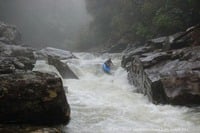
Conservation-oriented kayakers and canoeists sought protection in federal court on Wednesday from an illegal decision by the United States Forest Service involving the Chattooga Wild and Scenic River. The USFS decision, which was the culmination of a 2004 administrative appeal by American Whitewater, makes it a federal crime for paddlers to float the northernmost 21 miles of the River and its tributaries except on a limited seven-mile section during 6 or fewer days per year.

AW Seeks to End Chattooga Delays (NC/SC/GA)
05/28/2009 - by Kevin Colburn
American Whitewater and our attorneys have been in contact with US Forest Service officials at the local, regional, and National level asking for prompt resolution of the mismanagement of the Chattooga, which has now been delayed over 2 years. The USFS has not set a new deadline for releasing their long overdue decision, nor shared a reason for the delays.
Team completes First legal upper Chattooga descent in 30 years
01/09/2007 - by Kevin Colburn
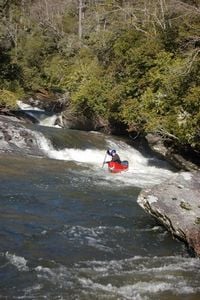
January 5th and 6th of 2007 marked the first legal descent of the upper Wild and Scenic Chattooga River in over 30 years. A team of kayakers and canoeists took two days to explore the river, traversing countless rapids and small waterfalls as they traveled through a remote and beautiful valley. What they found echoed the findings of the very first exploratory paddling trips made over three decades ago, which inspired the US Congress to designate the Chattooga as a Wild and Scenic River in 1974. Their photos and stories reveal a forbidden national treasure.
The contacts below include staff and volunteers working on this project. Make sure you are logged in if you wish to join the group.
| Title | Name | City | |
|---|---|---|---|
| Aw-board-lead | Don Kinser | Marietta GA | Details... |
| Aw-regional-coordinator | Charlene Coleman | SC | Details... |
| Aw-staff-lead | Kevin Colburn | Missoula MT | Details... |
Clubs
-
Georgia Canoeing Assoc.
Atlanta, GA -
Foothills Paddling
Greenville, SC -
Atlanta Whitewater Club
Atlanta, GA
Associated Rivers
Documents
Congressional Representative's Stand Against Paddling on the Chattooga (5/12/2024)
Letters in opposition of paddling on the Chattooga from Paul Broun, Robin Hayes and J. Gresham Barrett - Congressional Representatives
Rediscovering the Chattooga Headwaters (8/23/2007)
Don Kinser's personal report from his trip down the Chattooga Headwaters, as part of the 2007 USFS Expert Panel Study.
Chattooga Final Scoping Comments (9/13/2007)
American Whitewater's final scoping comments regarding the ban on paddling the Chattooga Headwaters, September 13, 2007
Chattooga National Wild and Scenic River Upper River Use Report (3/24/2020)
River Use Report for purposes of reconsidering congestion, conflict, and experience of various visitor types
Regions
Clubs
-
Atlanta Whitewater Club
Atlanta, GA -
Georgia Canoeing Assoc.
Atlanta, GA