
Addressing Public Safety, Navigability, and Aquatic Connectivity at Low-Head Dams
Establishing a National Low-Head Dam Inventory
Over the past two centuries, tens of thousands of low-head dams were constructed across rivers and streams to provide services such as diverting water for irrigation, municipal, and industrial uses. Others were built to prevent erosion of embankments or control flooding. Despite the widespread presence of these structures, until recently there was no reliable inventory documenting how many low-head dams exist in the United States or where they are located.
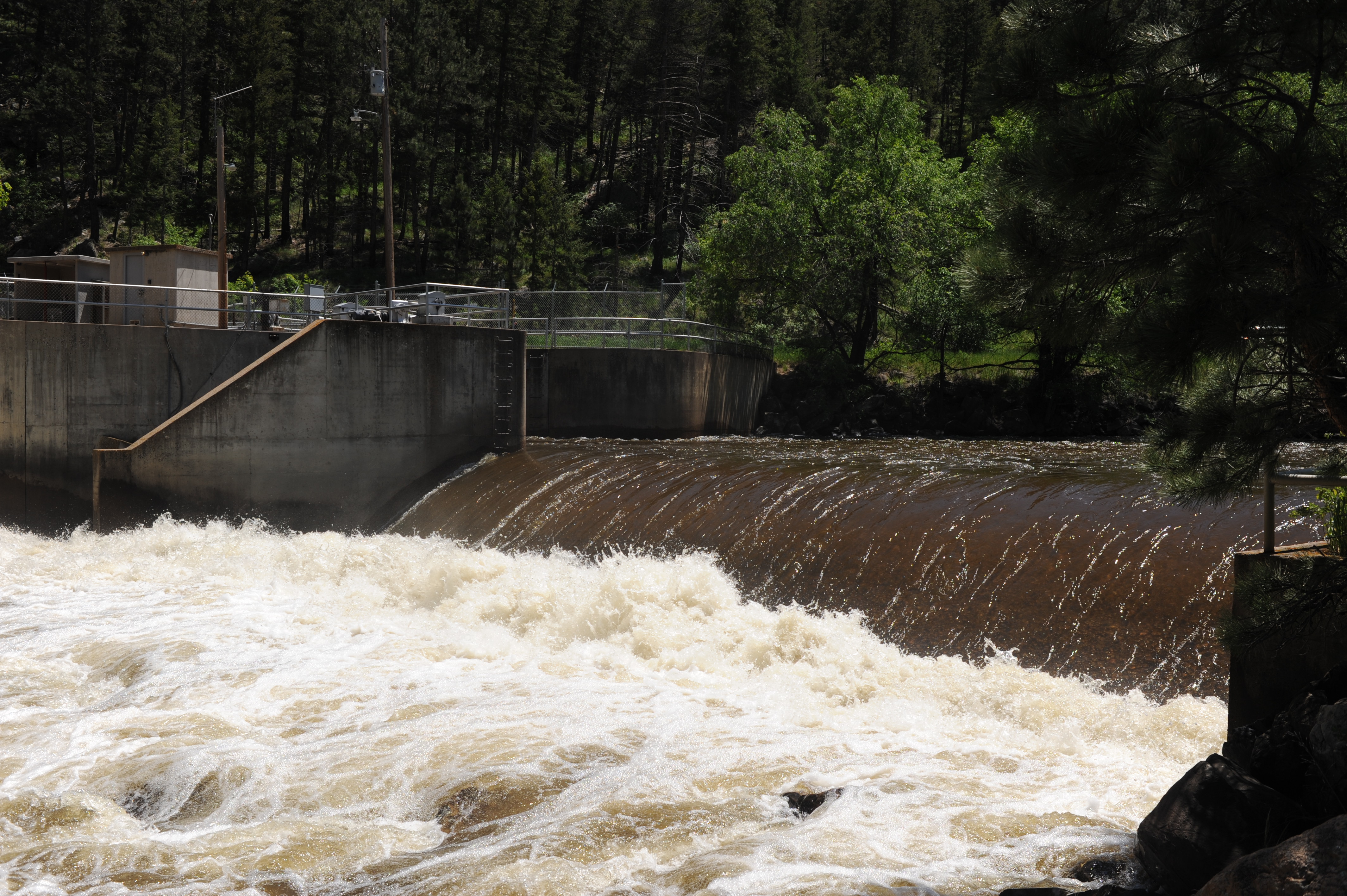
Over time, many low-head dams no longer serve their originally intended purposes and remain only as hazards to life and public safety. These structures are commonly referred to as “drowning machines” due to the physical characteristics of the hydraulic they create. Structural failures of low-head dams also present significant risks from flooding and the release of trapped sediment. In addition, these structures affect fish and wildlife habitat by disrupting connectivity and water quality and negatively affect recreation.
Over the past 50 years, low-head dams have claimed more than 1,400 lives. Because of their height and location within the river channel, they can be difficult to detect by upstream water users, including drift boaters, kayakers, rafters, and anglers. Low-head dams have also taken the lives of would-be rescuers. American Whitewater’s database of whitewater accidents and fatalities, maintained since 1972, documents that approximately 10% of fatalities nationwide result from individuals becoming trapped in a low-head dam hydraulic, helping demonstrate the extent of the public safety hazard posed by these structures.
Despite the significant public safety risks posed by these structures, low-head dams were historically not captured in the National Inventory of Dams (NID), maintained by the U.S. Army Corps of Engineers (USACE), because they typically do not impound large volumes of water and were not expected to cause widespread property loss upon failure. As a result, information on low-head dam hazards—and funding to address them—was inadequate.
What We’ve Accomplished
American Whitewater has played a leading role in advancing national policy and programs to address the public safety and environmental risks posed by low-head dams. Key accomplishments include:
- Maintained the American Whitewater Accident Database, a national database of whitewater accidents and fatalities for more than 50 years, documenting incidents at low-head dams and helping quantify the extent of the public safety risks posed by these structures
- Played a leadership role in developing the first national dataset identifying approximately 11,000 low-head dams across the United States, helping demonstrate the national scale of the issue
- Advanced federal legislation in the Water Resources Development Act (WRDA) of 2022 (Section 8122) directing the development of a nationwide low-head dam inventory
- Secured statutory updates in the Water Resources Development Act (WRDA) of 2024 (Section 1132) integrating low-head dams into the National Inventory of Dams, making these structures eligible for federal funding programs
- Supported the release of the first national Low-Head Dam Inventory by the U.S. Army Corps of Engineers in 2025, working directly with the Corps on quality assurance, data review, imagery, and communications
- Developed the American Whitewater Open-Source Signage Toolbox, which provides guidance, templates, and best practices for safety signage at low-head dams and along portage routes
- Continue working with federal and state partners to expand the inventory, improve data quality, and support public education and outreach efforts
Establishment of a National Inventory of Low-Head Dams
To address the need for better information and coordination, American Whitewater played a leadership role in the National Low Head Dam Inventory Task Force, working with partners to identify and document low-head dams nationwide. Through this effort, the Task Force developed the first national dataset of low-head dams and produced initial estimates identifying as many as 11,000 low-head dams across the country. This early work demonstrated the national scale of the problem and created the momentum needed to secure federal action.
Building on this foundation, American Whitewater worked with partners to advance legislation in the Water Resources Development Act (WRDA) of 2022 (Section 8122), with overwhelming bipartisan support, directing USACE to develop and maintain an official nationwide inventory of publicly and privately owned low-head dams.
Subsequent updates in the Water Resources Development Act (WRDA) of 2024 (Section 1132) clarified that the low-head dam inventory would be incorporated into the National Inventory of Dams. This important policy improvement ensures that low-head dams are eligible for funding resources available to dams listed in the National Inventory of Dams, expanding opportunities to address safety hazards and improve aquatic connectivity.
In 2025, USACE released the first national Low-Head Dam Inventory for public use—representing a direct result of sustained advocacy to establish a comprehensive federal program addressing low-head dam safety and aquatic connectivity. American Whitewater continues to work closely with USACE to improve the inventory through quality assurance, data review, imagery development, and communications support.
Low-head dams are defined as a “river-wide artificial barrier that generally spans a stream channel, blocking the waterway and creating a backup of water behind the barrier, with a drop off over the wall of not less than 6 inches and not more than 25 feet.”
The legislation directs USACE to develop the inventory in coordination with federal and state agencies and other relevant entities to include the following attributes:
- The location, ownership, description, current use, condition, height, and length of each low-head dam
- Information on public safety conditions at each low-head dam
- Public safety information on the dangers of low-head dams
- A directory of financial and technical assistance resources available to reduce safety hazards and fish passage barriers
- Other relevant information concerning low-head dams
USACE is required to make these data available through a publicly accessible website and provide a mechanism for periodic updates.
State Strategy: Advancing Safety and Removal at the State Level
In addition to advancing federal policy, American Whitewater is working with partners to develop state-level strategies that improve public safety and accelerate the removal or modification of unsafe low-head dams. This work includes supporting the development of state inventories, advancing policies that require warning signage, reducing regulatory barriers to removing obsolete structures, and providing technical resources—such as the American Whitewater Open-Source Signage Toolbox—to support effective hazard communication at low-head dams and along portage routes.
Several states have demonstrated effective approaches that provide models for broader adoption. For example, Indiana has enacted legislation recognizing the removal of unsafe low-head dams as serving the public interest, requiring warning signage, establishing responsibilities for dam owners, and allowing removal of qualifying dams without a state permit (Indiana S.B. 477 (2025), Pub. L. No. 14.). We are engaged in similar policy efforts are underway in multiple states as part of a coordinated national strategy.
American Whitewater also supports technical tools and planning frameworks that help states prioritize projects based on public safety risks, aquatic connectivity benefits, and community needs. By advancing policy and implementation at both federal and state levels, this coordinated strategy helps accelerate progress toward safer rivers and healthier aquatic ecosystems.
Future Goals: Establish a Low-Head Dam Assistance Program
Building on the Nationwide Low-Head Dam Inventory, we propose establishing a Low-Head Dam Assistance Program (“Assistance Program”) to be administered by USACE, along with authorization of funding to implement the program. The rehabilitation or removal of low-head dams is gaining attention as an effective strategy to reduce public safety risks, restore aquatic connectivity, and promote economic development through river-based recreation.
Where modification or removal of a structure is not immediately possible, technical assistance to provide effective warning signage and safe portage routes is critical. The objectives of the Assistance Program would include providing financial and technical assistance to state and Tribal natural resource agencies to develop and implement low-head dam planning and public education measures. These measures would include best practices for rehabilitating structures to improve passage for recreationists and aquatic organisms, development of action plans, and installation of warning signs near dams.
Financial assistance would support states working with dam owners and operators to mitigate safety hazards and fish passage barriers while maintaining the core functions of the structure. Assistance would also be available for removing structures that are abandoned, obsolete, or no longer serve an ongoing public need and have community support.
We propose an annual authorization of $60 million for the Assistance Program to support implementation of safety improvements, removal projects, and education efforts nationwide.