
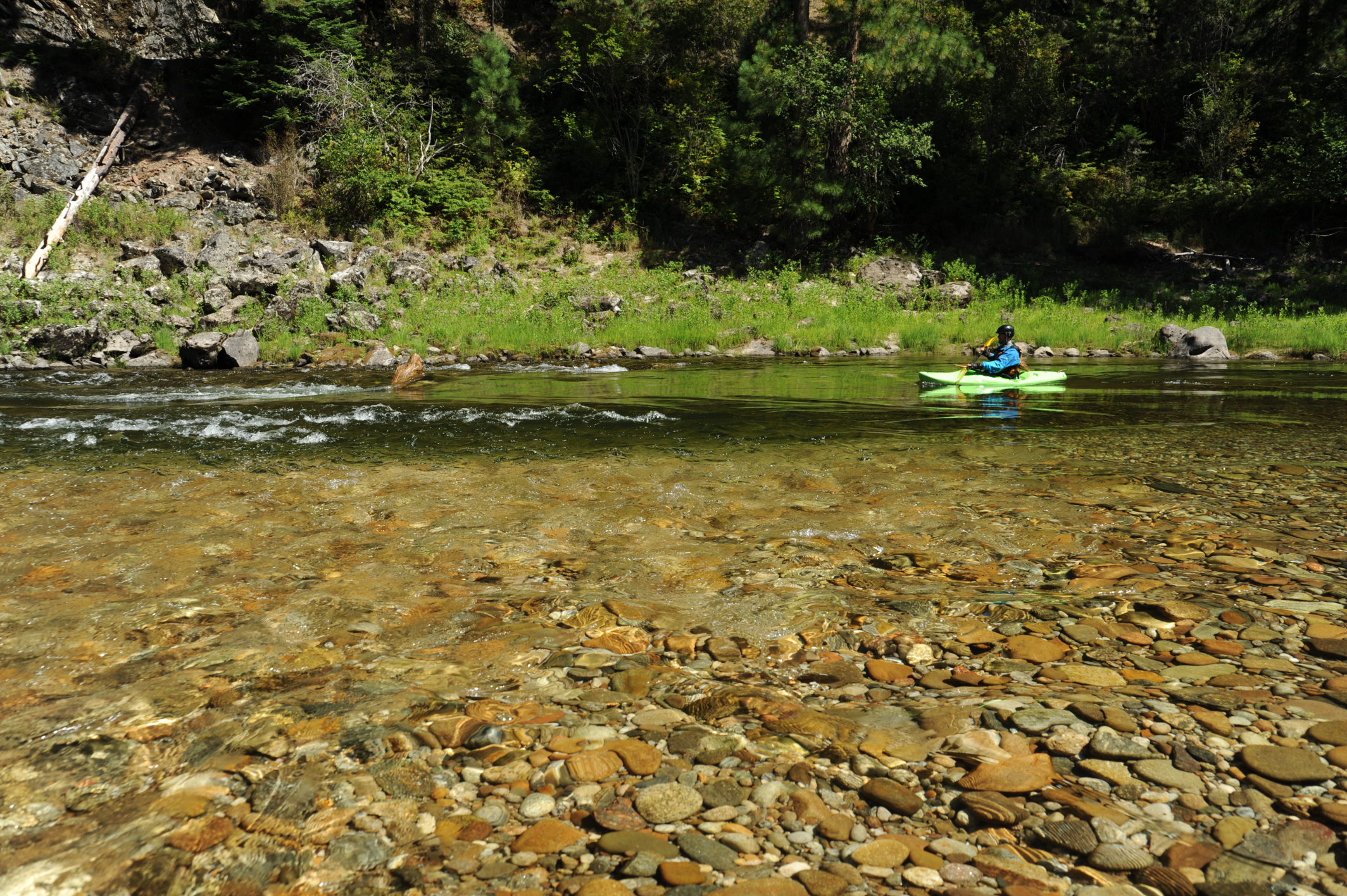
For over fifty years, the Clean Water Act has been the foundation of our nation’s commitment to healthy rivers and streams. American Whitewater works to defend and strengthen these protections to ensure that the waters we paddle, fish, and swim in are safe for recreation and for the communities that depend on them.
Clean water matters deeply to paddlers. Every splash, swim, or flip connects us directly with the health of our rivers. The Clean Water Act ensures that those experiences nourish—not endanger—us. It also sustains the rural and gateway communities whose economies depend on recreation and tourism. Across the country, rivers restored by the Clean Water Act have become centers of local life again, bringing back fish, wildlife, and economic vitality alongside paddlers.
When Congress passed the Clean Water Act in 1972, America’s rivers were in crisis. The Potomac, the Cheat, the Menominee, and countless others were too polluted for safe recreation. Today, many of these rivers once again support vibrant ecosystems and recreation-based economies. Paddlers have been part of that recovery—witnessing first-hand the transformation from lifeless, polluted channels into thriving, living rivers.
But this progress is fragile. The Act’s protections have been repeatedly narrowed by Supreme Court decisions and political rollbacks, leaving the headwater streams, ephemeral creeks, and wetlands that feed our nation’s rivers vulnerable to pollution and destruction. These are the same streams paddlers explore and the same waters that provide drinking water for one in three Americans. Pollution upstream quickly becomes pollution downstream.
American Whitewater has long supported restoring clear, science-based protection for these waters under the Clean Water Act. We’ve advocated for rules that recognize the hydrological reality that all waterways are connected. Our position is simple: protecting headwater streams protects entire river systems—and the communities, fish, and recreation opportunities they sustain.
In recent years, we’ve mobilized our community to defend the Waters of the United States (WOTUS) rule, which clarifies which waters fall under federal protection. While the rule has been caught in partisan battles, the science is clear and the public overwhelmingly supports its goals. Paddlers, more than anyone, understand that clean headwaters mean clean rivers.
The Clean Water Act has also been central to restoring flow and ecological health to dewatered rivers. From the Cheoah River in North Carolina to rivers across the country, American Whitewater has worked through hydropower relicensing processes to ensure that the law’s water quality provisions are used to bring rivers back to life. As the Cheoah shows, when we “just add water,” entire ecosystems recover, local economies rebound, and paddlers rediscover rivers once written off as lost.
Fifty years on, the Clean Water Act remains one of our most powerful tools for conservation and recreation alike. American Whitewater continues to advocate for its full implementation—ensuring that all our rivers, from the smallest creeks to the largest waterways, remain fishable, swimmable, and paddleable.