
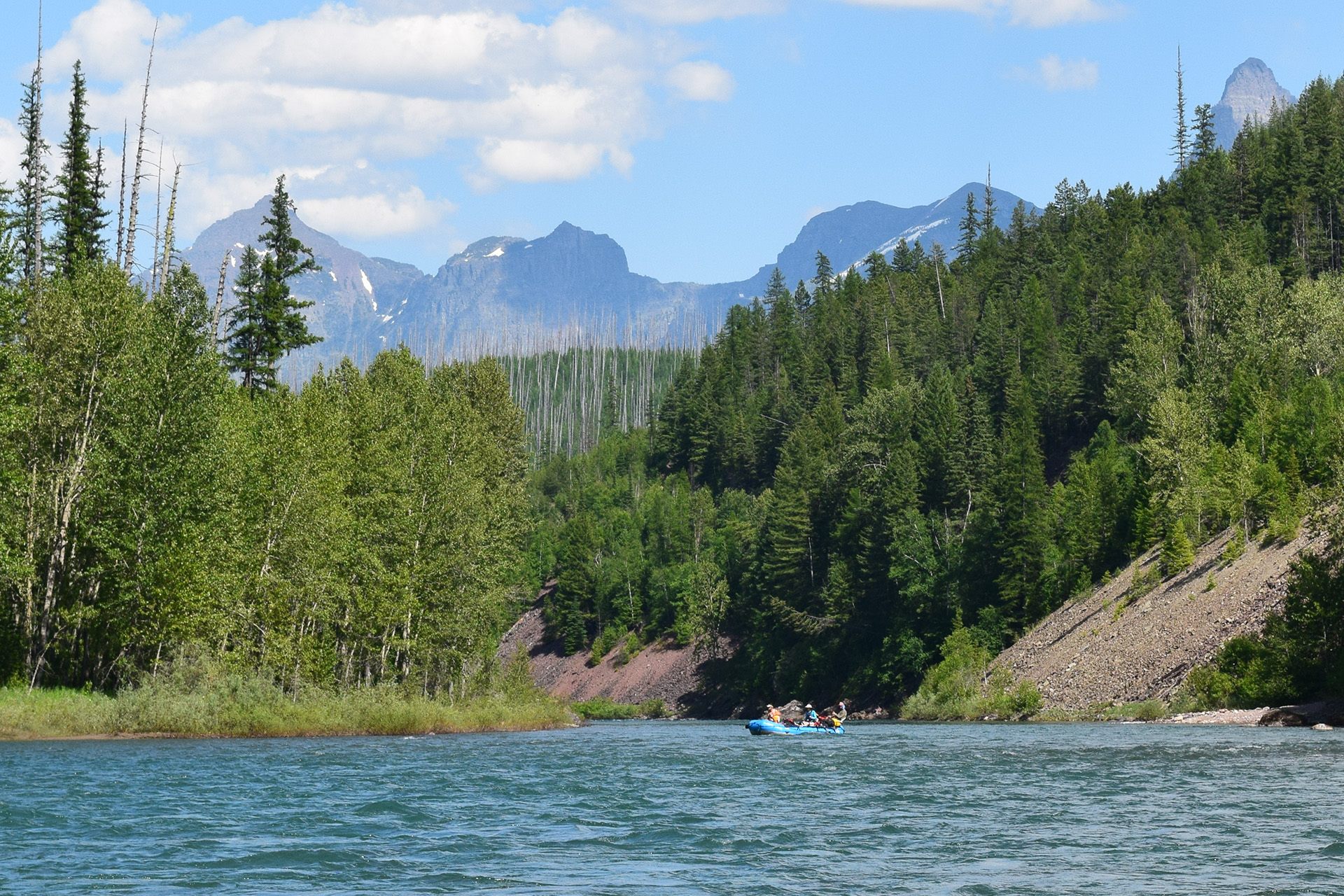
The Wild and Scenic forks of the Flathead River are national treasures flowing along Glacier National Park and through the Bob Marshall Wilderness in Northwest Montana. The rivers offer boating opportunities ranging from accessible whitewater runs to remote hike- and fly-in multi-day runs. Their gin-clear waters are home to abundant native fish and wildlife and are a testament to the value of protected public lands. A new Comprehensive River Management Plan would require people to get permits to boat the rivers and set user capacities that could eventually lead those permits to be limited. American Whitewater has filed an appeal of the plan, seeking more protective and equitable management of the river.
The US Forest Service and National Park Service have generally done a great job of managing these rivers. This is evident to anyone that is fortunate enough to experience them by boat or on foot. The new river plan is also pretty good, with some new common-sense regulations and monitoring that will help ensure the rivers are not degraded. American Whitewater supports these plan elements, which include requiring fire pans for fires, packing out human waste on two of three forks, and permits to track river use. With this said, we appealed the plan on three issues:
1.Headwater Boating: The Plan sets a very low threshold of only eight (8) boating trips each year on the headwaters of the Middle Fork Flathead upstream of the airstrip where many adventures start. There is no basis given for this very low threshold. Instead, the Plan proposes a goal of keeping this area “wild and pristine” by limiting boating but no other uses, intimating that more than a handful of small river trips would conflict with their laudable goal. They admit that use by anyone in this area is quite low currently. American Whitewater asks that either this area be managed just like other backcountry areas without a special boating threshold for limits or that all uses be tracked for potential limits equitably.
2.Non-Boating User Capacities: The Plan focuses on tracking boating use and comparing it against the capacity of the river corridors. Hikers, horseback riders, and other users would remain uncounted and unpermitted. In terms of user capacity, the plan is a boating plan, not a comprehensive plan. This will leave managers with little knowledge of trends in non-boating uses and inadequate data to understand where impacts may come from. It also means that when capacities are reached, it is boating that will likely be limited, not other kinds of use. American Whitewater asks that non-boating users also have management triggers and thresholds, as well as use-capacity numbers monitored.
3.Human Waste Management: The plan requires that human waste be packed out of the North and Middle forks of the Flathead, but not out of the remote South Fork. It is unclear if this distinction was purposeful, but American Whitewater asks that all visitors to the South Fork also be required to pack out their human waste to protect water quality and the recreation experience.
The next step is that a Forest Service official will review our appeal and host an administrative hearing to discuss our appeal and possible remedies. Ours is one of 25 appeals, some of which seek significant limits on boating in the near term, along with many other changes. We’ll continue to participate in this process, with the goal of ensuring the North, Middle, and South forks of the Flathead are protected and well-managed for generations to come.