
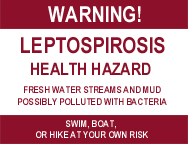
Leptospirosis is caused by water contaminated with the urine of infected animals. The bacteria have been found in cattle, pigs, horses, dogs, rats, and wild animals. Humans become infected through contact with water, food, or soil contaminated by their urine. The infection usually begins with skin contact, especially via mucosal surfaces like as the eyes or nose, or through broken skin. The bacteria survive in fresh water for as many as 16 days and in soil for as many as 24 days. The time between exposure to the contaminated water and the onset of sickness is between 2 days and 4 weeks. The bacteria can spread to any part of the body but the liver and kidneys are especially at risk.
Leptospirosis is a known occupational hazard for farmers, sewer workers, veterinarians, dairy farmers, and military personnel. It’s a known to infect campers, swimmers, waders, and paddlers who use contaminated lakes and rivers. In 1997 a group of Americans who went white-water rafting in
Leptospirosis is not very common among paddlers, and most cases have been contracted after making trips on tropical rivers. Several years ago six rafters in Costa Rica became ill. In the US, several paddlers on the Lower Potomac and Shenadoah drainages were infected. All had made runs at high water after intense local rains. Another paddler traced his infection a late fall run on West Virginia’s Big Sandy River after an intense storm that dropped 2 inches of rain in just over an hour. Cattle ranching are a major occupation there, and cows live on all the surrounding hills. He experienced intense, flue-like symptoms, and said if he had known about the disease he would have sought medical help a lot earlier. Because this is a rare disease, doctors may need to be told about recent activities in questionable water.
Symptoms of leptospirosis include high fever, severe headache, chills, muscle aches, and vomiting. It may include jaundice (yellow skin and eyes), red eyes, abdominal pain, diarrhea, or a rash. If the disease is not treated, the patient can develop kidney damage, meningitis, liver failure, and respiratory distress. Some people die; others have no symptoms at all and become carriers of the disease. Treatment includes antibiotics like doxycycline or penicillin, which ideally should be given early in the course of the disease. Intravenous antibiotics are required for persons with more severe symptoms.