
The Tuolumne River needs your help!
As part of its Water System Improvement Program (WSIP), the San Francisco Public Utilities Commission (SFPUC) has proposed diverting an additional 25 million gallons of water per day from the Tuolumne River. In total, about 60% of the Tuolumne River is already diverted for urban and rural uses, and increasing diversion will do further harm to the River. The SFPUC already diverts one-third of the Tuolumne River as it flows through Yosemite National Park. Outdoor water use alone is driving 60% of the anticipated increase in water demand.
The SF Planning Department, which is overseeing the Program Environmental Impact Report (PEIR) for the SFPUC’s Water System Improvement Program (WSIP), received hundreds of comments on the draft plan.
Write a Letter
Please write a letter encouraging San Francisco to protect the Tuolumne River by pursuing water conservation and recycling rather than increasing water diversion. Insist on a sustainable water plan that will protect our watersheds in the Bay Area and Sierras.
Tuolumne River Talking Points
Background
• From its headwaters in Yosemite National Park, the Tuolumne River cascades 162 miles before joining the San Joaquin River and flowing into the San Francisco Bay-Delta.
• The Tuolumne River supports a diverse biological community, including migratory waterfowl, raptors (including peregrine falcons and bald eagles), mule deer, black bears, foothill yellow-legged frogs, Sierra Nevada red fox, rainbow trout, steelhead and Chinook salmon.
• As the largest of three major tributaries to the San Joaquin River, the Tuolumne River contributes much-needed freshwater to the San Francisco Bay-Delta.
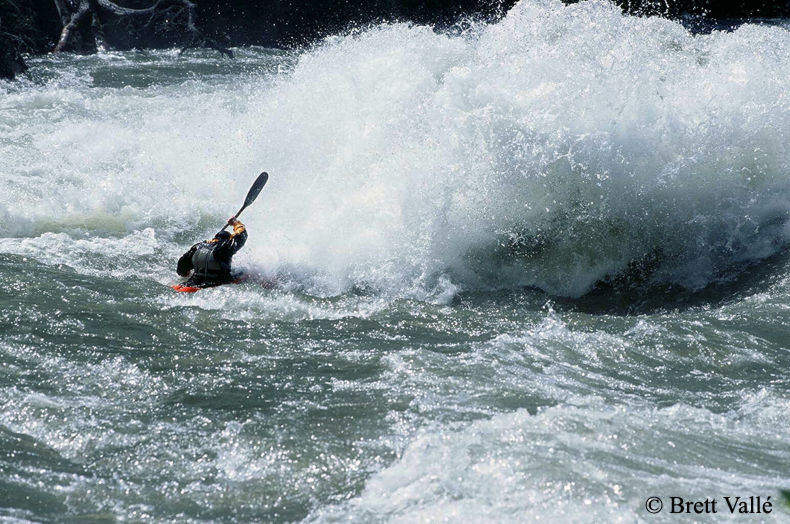
• The Tuolumne River offers unparalleled outdoor recreation opportunities, hosting thousands of hikers, whitewater boaters, anglers, and family campers each year.
• The Tuolumne was designated a Wild and Scenic River in 1984.
The Threat
• In total, about 60% of the Tuolumne River is already diverted for urban and rural uses, and increasing diversion will do further harm to the River.
• As part of its Water System Improvement Program (WSIP), the San Francisco Public Utilities Commission (SFPUC) has proposed diverting an additional 25 million gallons of water per day from the Tuolumne River.
• The SFPUC already diverts one-third of the Tuolumne River as it flows through Yosemite National Park.
• Outdoor water use alone is driving 60% of the anticipated increase in water demand.
Inadequate Studies/Flawed Analysis
• The Draft Program Environmental Impact Report (PEIR) used flawed modeling to determine the anticipated increase in water demand, thus inflating projected future needs.
• In contrast to other metropolitan areas that have managed to reduce water demand in the face of growth, the anticipated 14% increase in demand projected by the SFPUC is large and out of step for the Bay Area.
• The PEIR fails to properly identify and address all of the impacts of taking more water from the Tuolumne River. This failure largely stems from the lack of an adequate baseline study of the Upper Tuolumne River – a comprehensive study has not been conducted in over 15 years. A new study was initiated in 2006, but will not be completed in time to inform the environmental review process.
• The PEIR does not take into consideration the impact of climate change on precipitation in the Tuolumne River watershed. The State of California predicts that global warming could reduce the Sierra snowpack by 5% by 2030 and as much as 33% by 2060.
Conservation, Efficiency and Recycling
• Water conservation and efficiency measures are the cheapest, easiest, and least destructive ways to meet demand and extend supply.
• The SFPUC’s “preferred alternative” ignores conservation, efficiency, and recycling measures that their own studies found could eliminate the need to divert more water from the Tuolumne by at least 74%.
• Per capita water use is projected to increase for wholesale customers, indicating they lack effective conservation programs.
• When it comes to water conservation, the Bay Area lags far behind other metropolitan areas such as Seattle and Los Angeles that are reducing water consumption even in the face of growth. As a region known for a strong environmental ethic, the Bay Area should be a leader in water efficiency and conservation.
Other Points
• Decreasing reliance on the Tuolumne is critical not only for protecting the health of the River, but also for preparing for the future uncertainty of the Sierra snowpack as a result of global warming.
• By pursuing a plan to divert additional water from the Tuolumne River, the SFPUC risks delaying their capital program, causing cost overruns and failing to increase the reliability of the water supply.
Recommendations
• The SFPUC should re-evaluate its projections for future water demand and conservation potential in light of flaws and inaccuracies in their studies.
• The SFPUC should conduct a study to determine the maximum technical potential for conservation and efficiency savings within the SFPUC service territory.
• Any additional demand should be met through increased investment in conservation, efficiency, and recycling.
• The SFPUC should adopt a policy of reducing diversions from the Tuolumne River over time.
• A comprehensive watershed study should be completed to adequately assess the environmental impacts of the WSIP.
Submit letters to:
Paul Maltzer, Environmental Review Officer
San Francisco Planning Department
1650 Mission Street, Suite 400
San Francisco, CA 94103
Send emails to: wsip.peir.comments@gmail.com <mailto:wsip.peir.comments@gmail.com>
Sample Letter
(Date)
Paul Maltzer, Environmental Review Officer
San Francisco Planning Department
1650 Mission Street, Suite 400
San Francisco, CA 94103
Dear Mr. Maltzer:
Your environmental review of the San Francisco Public Utilities Commission’s plan to take more water from the Tuolumne River fails to adequately identify and address all of the environmental impacts to the River. I urge you to undertake additional studies before finalizing this document.
I support the alternatives identified in your draft document that protect the Tuolumne River from new diversions. Requiring more water conservation, efficiency, and recycling is the best way to lessen impacts on the Tuolumne River while promoting a sustainable water plan for the Bay Area.
Only by ensuring that healthy amounts of water continue to flow into the Tuolumne River can we protect this irreplaceable natural treasure.
Sincerely,
(Your name and address)
Learn More
Visit the Tuolumne River Trust website at www.Tuolumne.org <http://www.tuolumne.org/>
Our report is available at www.tuolumne.org/content/article.php/sfreport <http://www.tuolumne.org/content/article.php/sfreport>
The Draft EIR is available at www.sfgov.org/site/planning_index.asp?id=37672 <http://www.sfgov.org/site/planning_index.asp?id=37672>
(Scroll down to “Public Utility Commission (PUC) Projects: SF PUC Water System Improvement Program DPEIR.”)
For more information, contact the Tuolumne River Trust at peter@tuolumne.org <mailto:peter@tuolumne.org> or (415) 292-3531 x301.
Thank you for your interest in this vital campaign. We look forward to working with you to protect the Tuolumne River!