
The La Grange Dam on California's Tuolumne River has provided hydropower since 1924, and has operated without a license from the Federal Energy Regulatory Commission (FERC) the entire time. In late 2012, FERC ordered dam owners and operators Turlock and Modesto Irrigation Districts to get a license, which are required for non-federal hydropower projects located on navigable rivers. The Districts challenged FERC's order with a number of claims, including that the Tuolumne River was not navigable. On Friday, July 19, 2013, FERC issued a decision affirming that the river is navigable, handing down a victory for navigability and recreation on California's rivers.
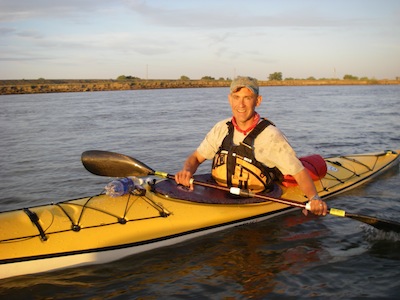
American Whitewater joined with our partners to intervene in the proceedings to, among other things, support the determination that the Tuolumne is a navigable river. Navigability is an important consideration for non-federal hydropower projects because FERC licenses are required for projects that are located on "navigable waters of the United States" under Section 23(b)(1) of the Federal Power Act. There are a number of ways that a river can be shown to be navigable, and recreational boating is one. In this case, American Whitewater worked with local kayaker John Dye (pictured) to demonstrate that the Tuolumne is navigable at the La Grange Dam. Dye, who works with Rivers For Change, boated the reach in 2012, and together, our work supported the finding that the Irrigation Districts are required to get a FERC license.
A FERC license at the La Grange Dam provides an opportunity for improved flows on the Tuolumne River. The Districts are currently deciding whether to appeal the decision or move forward with applying for a FERC license.