
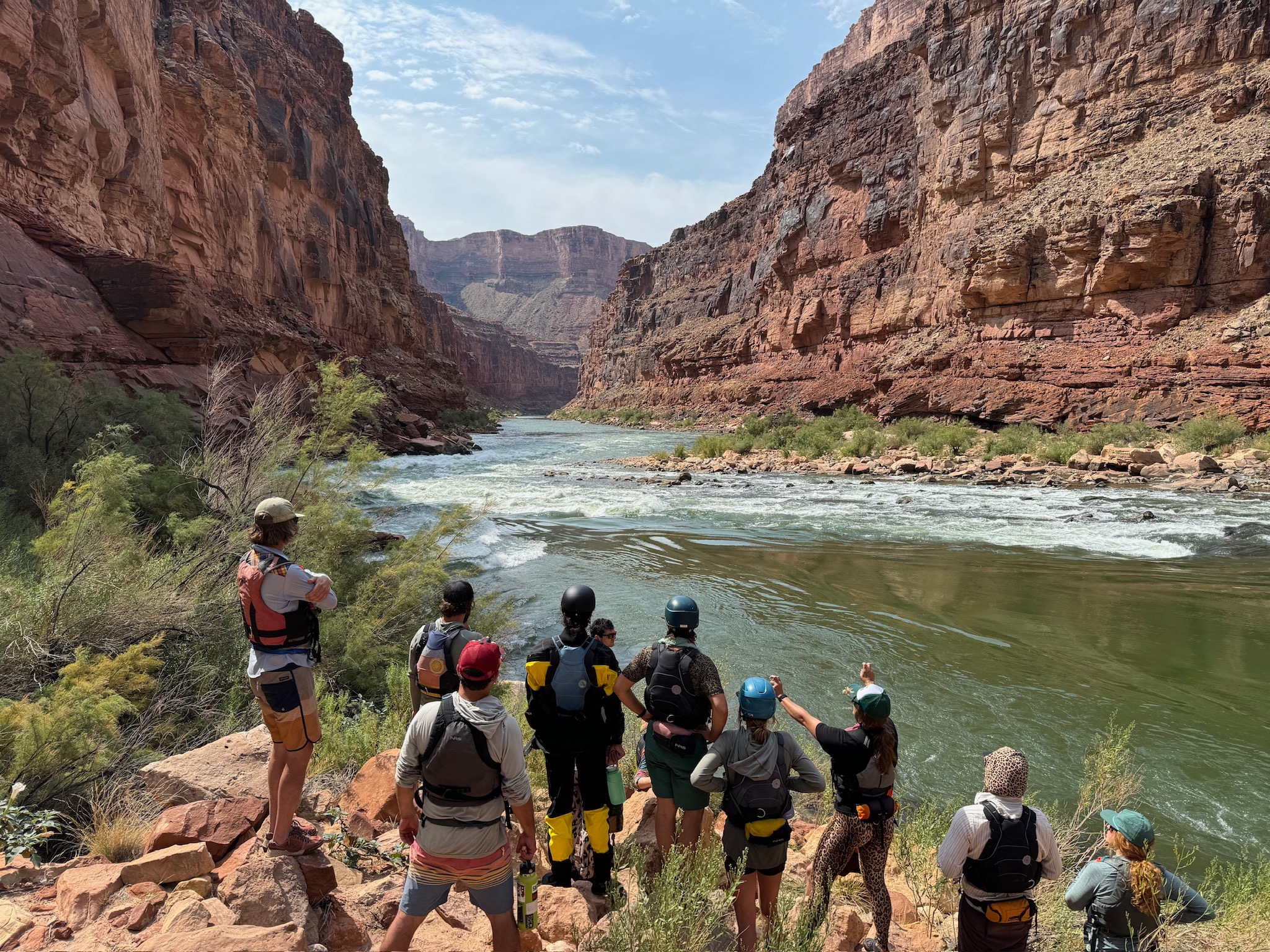
In March, American Whitewater submitted technical comments on the future of Glen Canyon and Hoover Dams and the associated impacts to water management across the Colorado River Basin. The federal government, through the Bureau of Reclamation, is charged with determining how the Colorado River’s largest dams will operate after current operating guidelines expire this year. These decisions will have direct impacts on the Grand Canyon and numerous upstream reaches of the Colorado River Basin, including canyons with world-class recreation opportunities. The rivers of the Colorado River Basin are the lifeblood of the communities and ecosystems they run through.
American Whitewater helped over 800 boaters and river lovers provide comments to the Bureau of Reclamation during the most recent public input opportunity. Over 200 of those comments were unique, including stories of Grand Canyon river trips and compelling reasons for ensuring that the Grand Canyon still exists for our next generations to enjoy. Finding solutions for the future of the Grand Canyon and the Colorado River Basin can feel like an insurmountable task. However, we are more galvanized than ever to meet this challenge, and our biggest takeaway is that we need to ensure the voice of river users remains strong and at the table.
In American Whitewater’s comment letter to the Bureau of Reclamation, we prioritized the following:
- Infrastructure modifications at Glen Canyon Dam must be addressed immediately. The risk of reaching deadpool or major dam failure could happen as early as this year, and there are no solutions in place.
- Impacts to recreation and the environment in the Grand Canyon need to be fully recognized and analyzed. Reclamation fails to understand simple concepts, such as how “tidal flows” or hydropeaking daytime-nighttime flow fluctuations impact river trips.
- Further research must be done as soon as possible to inform decision-makers and the public what the real impacts will be on valuable resources at low and unpredictably variable water levels.
- Decision makers need to use the best available science. Already since the government published their draft proposal, the near-future water outlook for the basin has plummeted. Changing hydrological conditions don’t just have impacts for this year; they must provide the complete basis for all future modeling scenarios. The bottom line: Every scenario that has been proposed is presented as drastically more rosy than reality.
- Water managers and decision makers need to consider what the big picture impacts will be on upper reaches of the basin as water is moved around to meet emergent and long-term downstream water supply needs.
So, what happens next?
Since submitting our official comments in March, American Whitewater continues the drumbeat on these important messages. We have elevated our comments and those of our members with federal lawmakers, our partners, and other stakeholders in the river basin when we advocated in Washington, DC, this month and as we’ve met with leaders across the West. We will continue to ensure that the river itself has a voice in this high-stakes process to determine the future of the Colorado River.
We continue to track the tense, though very stale, negotiations between the seven basin states that each have a piece of the Colorado River pie, a pie that was never as big as they thought and which is rapidly shrinking. In lieu of any real progress towards agreed-upon cuts, we are asking the Bureau of Reclamation to use their full authority to make top-down conservation mandates for Colorado River water before it’s too late. We expect to see a revised plan of action released later this summer, and we will ensure that the people who know and care about the river the most are aware of its future.
Top photo by Tyler Whitcomb.
Read the Full Comment Letter to the Bureau of Reclamation
Below, you can read our comment letter that was submitted on March 2, 2026, to Scott Cameron, the Acting Commissioner of the Bureau of Reclamation: