
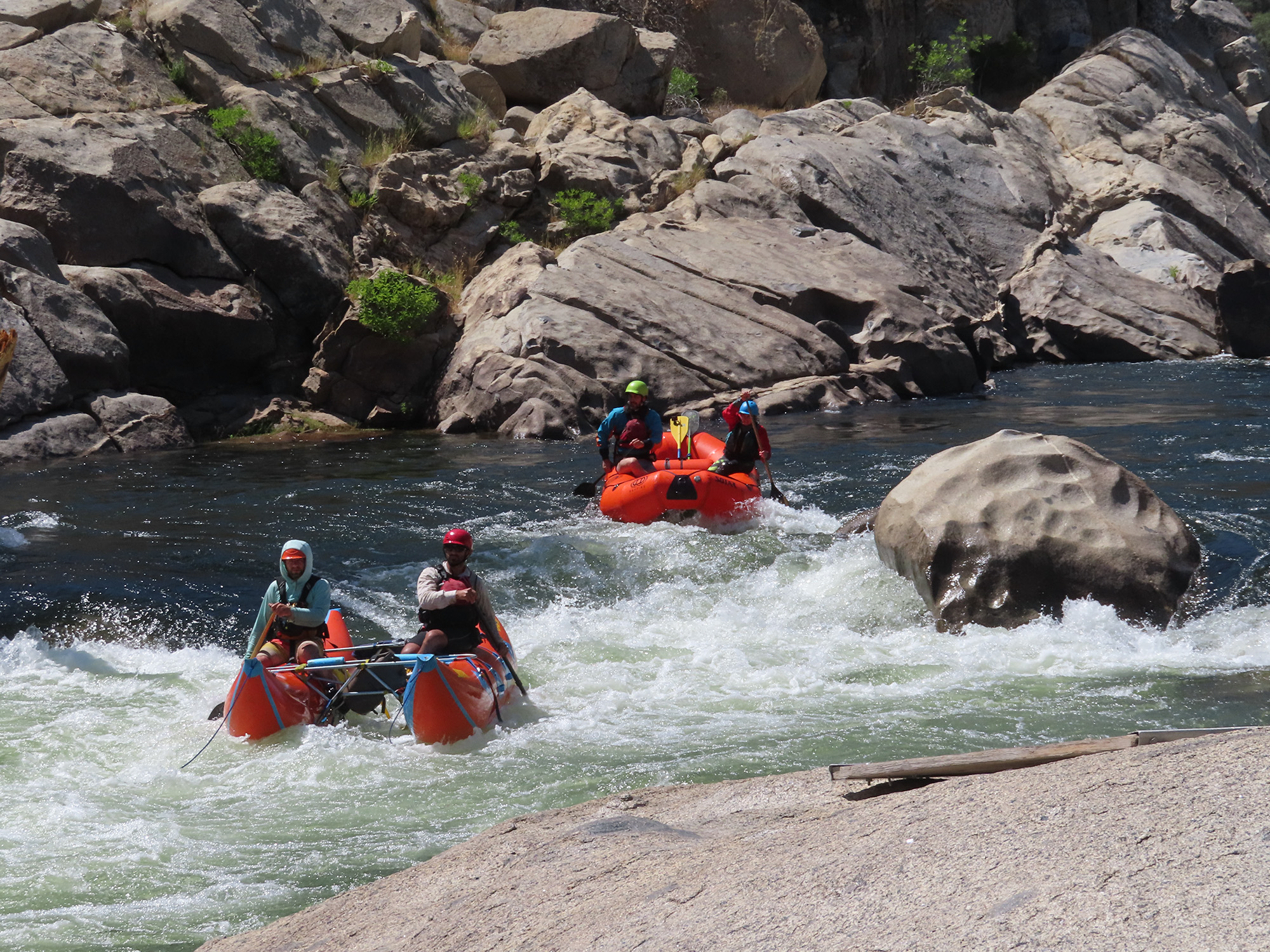
The San Joaquin River below Pacific Gas & Electric Company’s (PG&E) Kerckhoff Hydroelectric Project is more than a power generation reach—it’s a heavily visited public recreation corridor where the speed at which the river rises and falls can mean the difference between safe use and sudden danger. Flowing through the Bureau of Land Management’s San Joaquin River Gorge Special Recreation Management Area, this stretch winds through granite walls and Class III–V whitewater, just an hour outside Fresno. Federal land managers have found the river suitable for inclusion in the National Wild and Scenic Rivers System in recognition of its outstanding cultural, wildlife, scenic, and recreational values.
Tens of thousands of visitors come here each year to fish, swim, boat, hike, mountain bike, and reconnect with the outdoors. Yet the character of this river and the safety of those who experience it are directly shaped by upstream hydropower operations. For years, American Whitewater has worked to ensure those operations account not just for megawatts, but for people, advancing a straightforward solution at the center of the project’s ongoing relicensing: common-sense ramping rates that manage how quickly the river rises and falls.
When the River Rises Without Warning
Rapid changes in flow below Kerckhoff Dam can translate into dramatic shifts in river level throughout the Gorge. In 2018, a sudden spike in flows swept several teenagers into the river and resulted in a tragic drowning. Since then, project operations have continued to produce large fluctuations that can translate into 5-12 foot changes in stage height at popular recreation sites.
Stage height refers to the elevation of the river’s surface relative to the riverbank—essentially, how high the water sits at a given location. When releases increase, the river rises accordingly. In the confined canyon below Kerckhoff, operational changes can cause the water surface to climb several vertical feet in a short period of time. These changes are reflected in recorded flow data and in the experiences of anglers, hikers, swimmers, and whitewater boaters who recreate within the San Joaquin River Gorge.
Will Recreators Understand a Visual Cue and 500 cfs?
PG&E’s public safety proposal for the San Joaquin River Gorge relies primarily on maintaining a “visual cue” flow of approximately 500 cubic feet per second. The idea is that a visibly moving river will signal danger and discourage people from entering the channel before larger releases occur.
In reality, most shoreline visitors and boaters with plans to paddle the reach have no meaningful reference for what 500 cfs represents. A steady release at that level may appear inviting rather than cautionary. For anglers, swimmers, and whitewater boaters, visible current often signals opportunity—a fishable flow, a runnable level, or welcome moving water on a typical hot Central California day. Instead of deterring recreation, the cue could attract people to the river.
More importantly, maintaining 500 cfs does nothing to limit what happens next. It does not prevent a sudden surge from hundreds to thousands of cubic feet per second within a short time frame.
A Practical Solution: Common-Sense Ramping Rates
Throughout the relicensing process, American Whitewater has advocated for enforceable ramping limits that directly control how quickly the river changes. Specifically, for the San Joaquin River Gorge we have supported a standard preventing the river from rising or falling faster than one vertical foot per hour at an upstream gauge. Similar ramping rates are already used at many hydropower projects across California.
American Whitewater recently presented this analysis in comments on the Environmental Assessment prepared by the Federal Energy Regulatory Commission for the Kerckhoff Hydroelectric Project. We urged regulators to examine whether enforceable ramping limits are both feasible and necessary to address the public safety risks identified in the record.
Common-sense ramping rates ultimately advance both human safety and ecological resilience. In a heavily visited landscape like the San Joaquin River Gorge Special Recreation Area, the goal should be simple: ensure that hydropower operations allow people to safely experience one of California’s most remarkable river corridors.