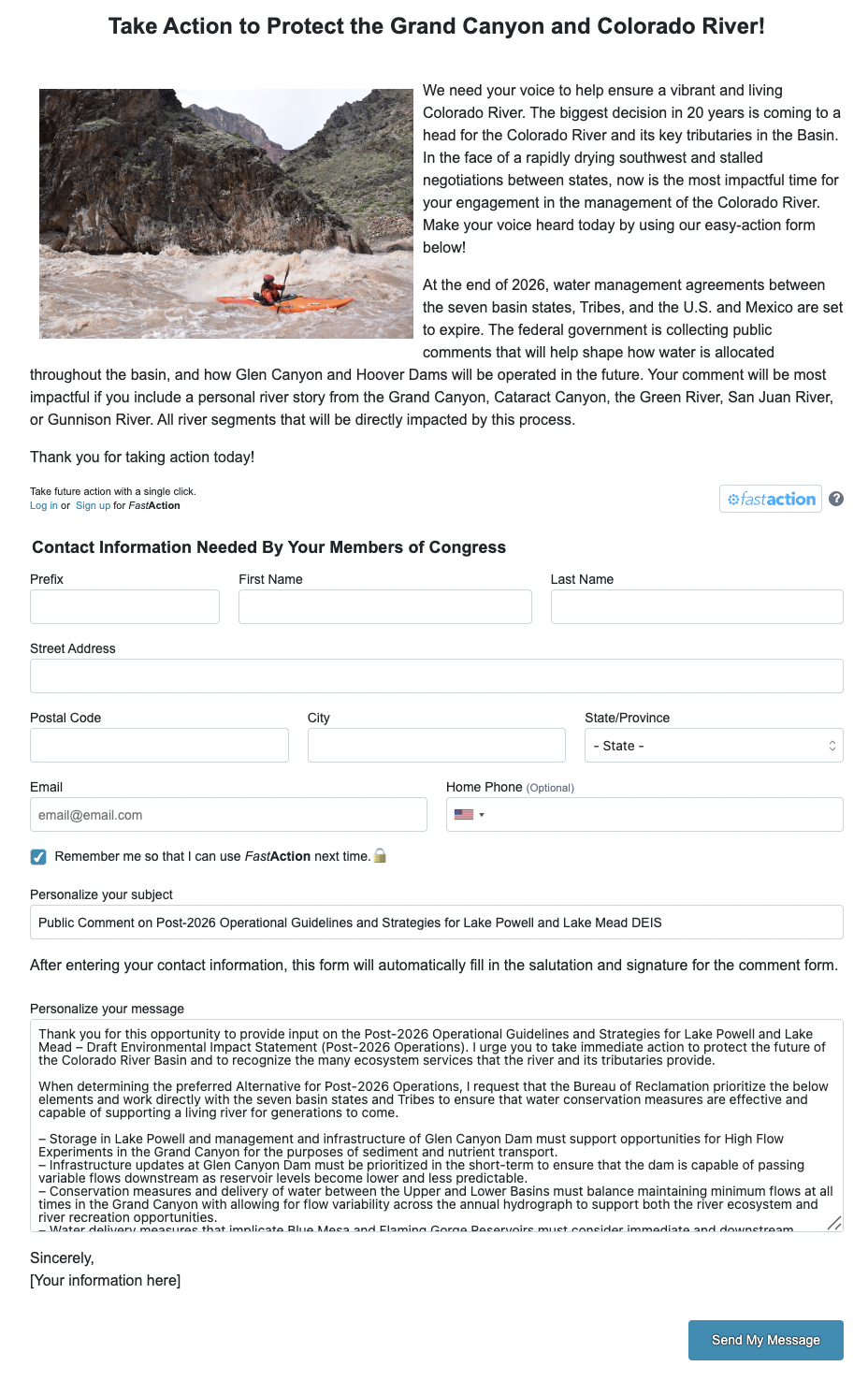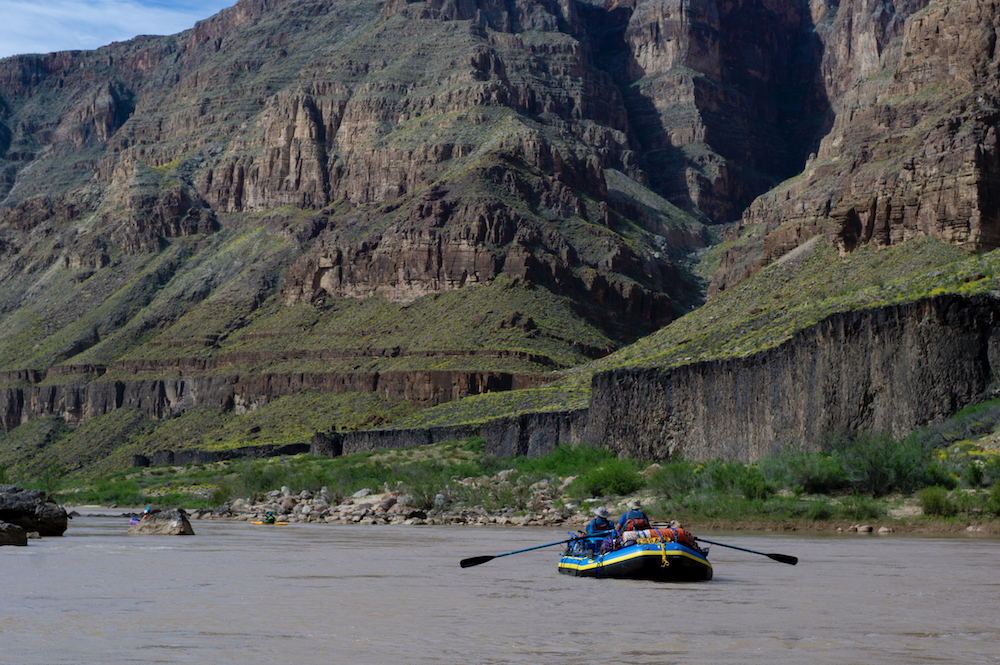
A long-awaited public process for the future of the Colorado River has arrived, offering you a chance to influence how flows in the Grand Canyon and the entire Colorado River watershed are managed. This month, the Bureau of Reclamation is accepting input on how Glen Canyon and Hoover Dams will be operated into the future and how water will be allocated throughout the basin in the face of severely reduced water supplies.
These decisions will directly affect the health of our rivers in the Southwest, from the Gunnison Gorge to Gates of Lodore to the Grand Canyon. American Whitewater needs you to speak up to ensure that these river canyons are not the casualty of a century-old irrational water allocation debate. Decision makers in Washington, D.C., and throughout the basin states need to know that the Colorado River Basin is a network of living, vibrant rivers and canyons, not just a system of pipelines.
We have made it easy for you to send your comments directly to the Bureau of Reclamation using this simple form. Personalizing your message with a story from the river makes a big difference. The rivers that are most likely to be affected by these broad-sweeping water management decisions include the Grand Canyon, Cataract Canyon, the San Juan River, the Gunnison River, and the Green River. All of these rivers and their many canyons have for millions of years transported water through the Southwest, and now the dams and reservoirs that dot their paths significantly affect the future flow of water through these important places.
The Colorado River is understood to be the hardest-working river in our country, providing drinking water to over 40 million people and sustaining cities, farms, and two countries. This is not a trade-off between access to clean drinking water and protecting river recreation opportunities. Through science-based river management and significant water conservation efforts, we can ensure that the Southwest has living rivers in it that sustain local economies and natural ecosystems, and where our future generations can still experience flowing rivers and remote desert canyons.
Take action today to give your input on the future of the Colorado River. Comments will be accepted until March 2, 2026.