American, North Fork

Euchre Bar to Mineral Bar(Giant Gap)
Reach banner
DifficultyIV-V
Length14.4 mi
Avg Gradient54 fpm
GaugeNf American R a North Fork Dam Ca
Flow Rate as of 57 minutes
506 cfsrunnable
Reach Info Last UpdatedJanuary 20, 2026

River Description

History:

The Run: Giant Gap is a California classic run with great canyon wilderness scenery and two spectacular vertical walled gorges. Its down side is that it has inconsistent difficulty, and were there easy mid-run access, it would likely be paddled as two different sections. It can be paddled as a two day run but that is uncommon as most groups choose to meet very early at the Colfax-Iowa Hill Road campground to set shuttle. An 8am meeting here should see a group off the river by 5pm with a leisurely pace which is fine in May but a problem in January.

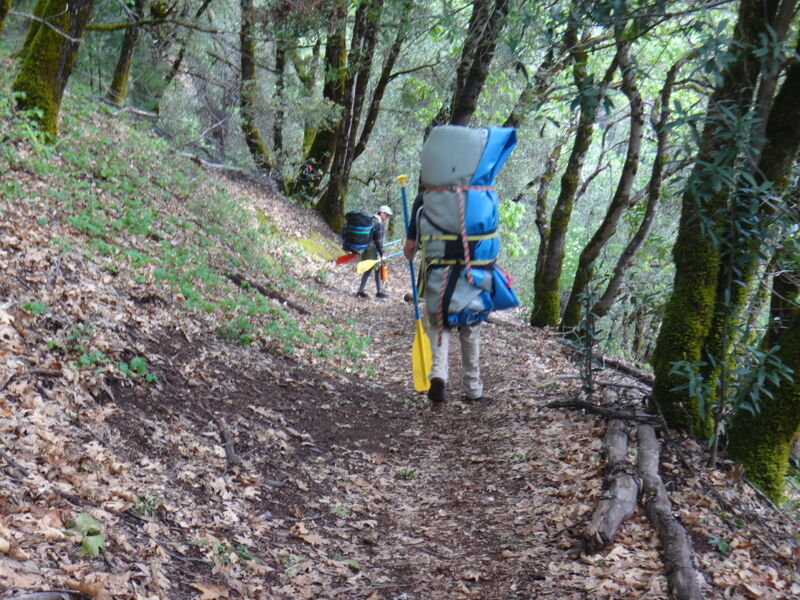
From the put-in boaters are faced with a 1.5 mile, 1700 foot descent down a well defined trail that contours and switchbacks down to the river. This trail starts rocky but quickly becomes leaf covered and common practice over the years has had boaters tying a sling to front and rear grab loops and dragging (or being dragged) to the river which should take about 40 minutes. Whilst poison oak lines the brush either side, the trail its self is free from any vegetation. The trail hits the river at the Euchre Bar footbridge by a large slow moving pool.

Moving downstream the run is immediately class III water and quickly enters the first vertical walled gorge, which in wetter months can have a spectacular waterfall running down the wall. No harder rapids are encountered in this gorge, just the odd larger hole and the river emerges into the open space of Green Valley and eases to class II/III. Giant Gap can be seen approaching downstream, a narrow gorge between 2000 foot rock faces. Just before entering Giant Gap proper a rapid with undercut house sized rock center is encountered. A large tree trunk had been pinned to this rock for many years until it was washed downstrem in Dec 2010 floods.

As Giant Gap is entered the difficulty climbs to class IV, and Grater is encountered, a congested shallow rapid whose blind line is not immediately apparent but is

...
River Features

Euchre Bar Trailhead

Distance: -1.5 mi
Access Point
Portage
Euchre Bar Trailhead

Park here and then follow the hiking trail 1.5 miles to the river at Euchre Bar bridge.

Euchre Bar Bridge

Distance: 0 mi
Euchre Bar Bridge

There is pool to start in and a few easy rapids to warm up in.
Grater

Class: IVDistance: 3.3 mi
Rapid
Grater

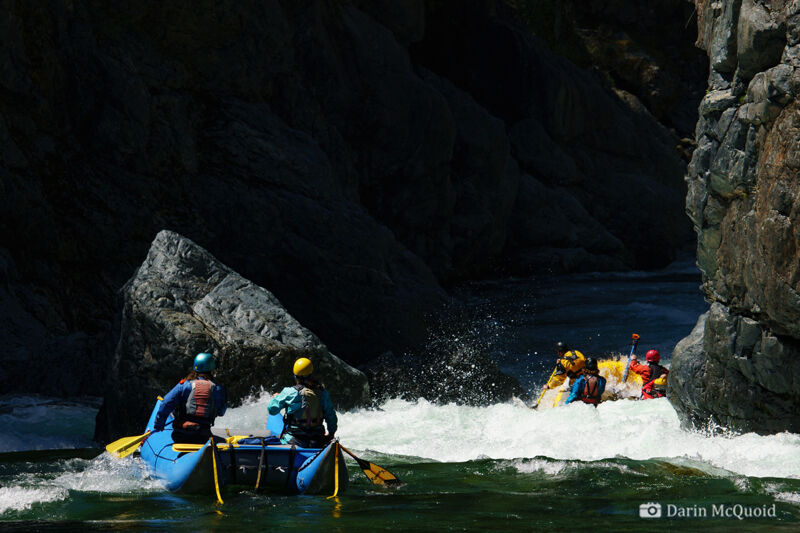
Grater signals the start of Giant Gap proper and the main difficulties. It is a shallow, congested and rocky rapid and at lower flows very boney. People generally run it left, and aggressive boat scouting is generally sufficient.
Nutcracker

Class: VDistance: 3.4 mi
Rapid
Nutcracker

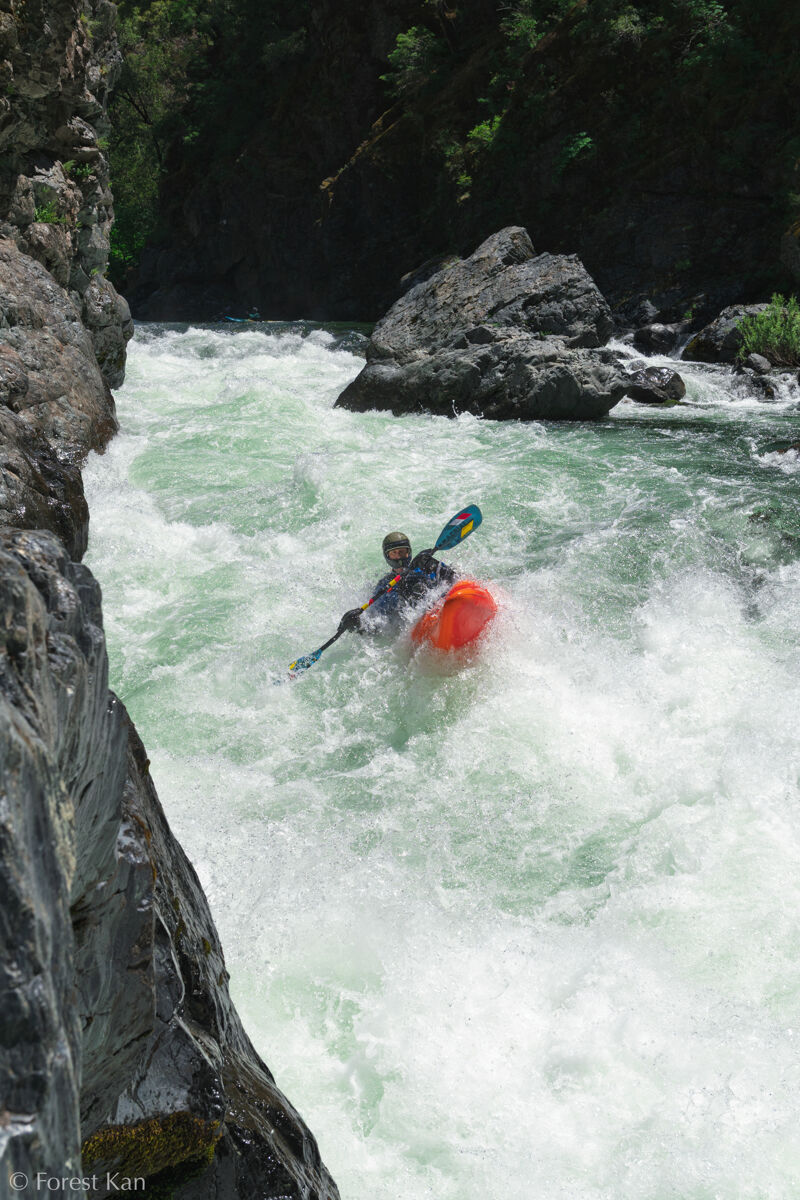
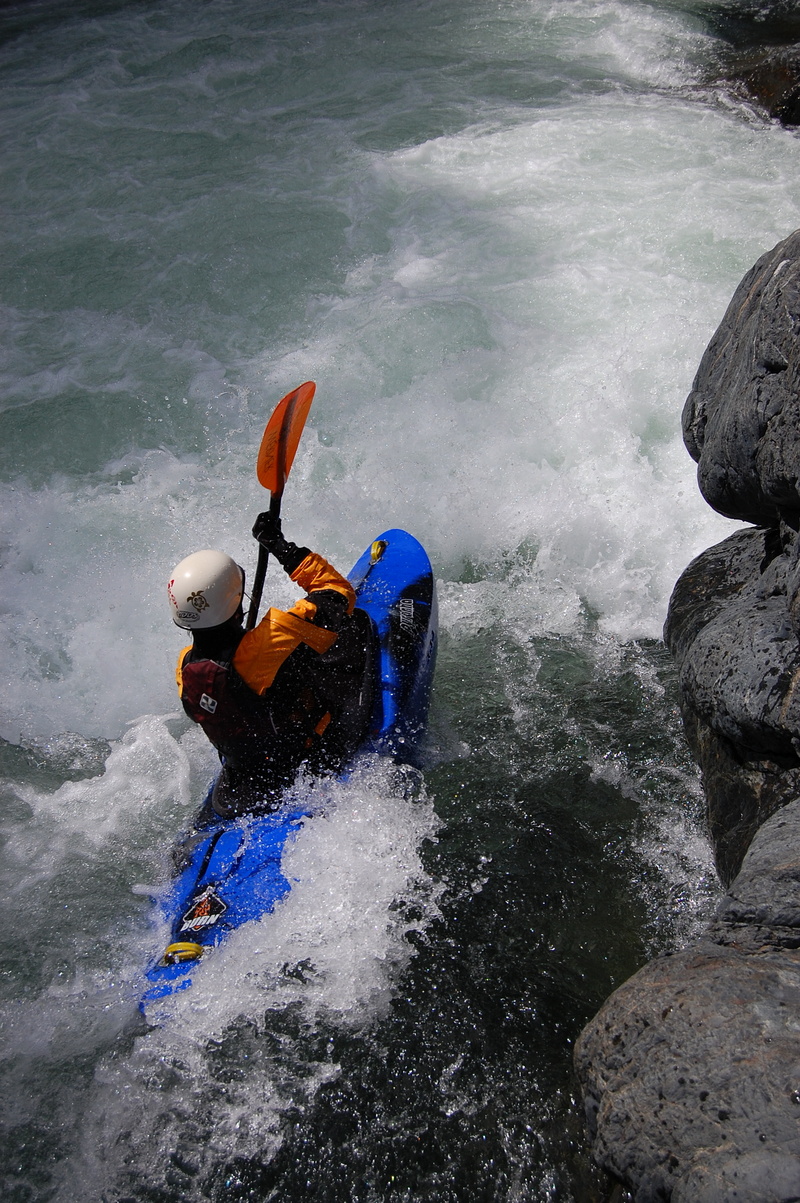
Nutcracker is formed where the river flows over a rock fence then constricts tightly whilst steepening, being constrained by a vertical cliff on the right slide and downstream a large round boulder on the left. Boaters arriving at the horizon line are often greated with no better clue as to a line than a cloud of mist rising from below. However this rapid turns out to be quite forgiving, though wonderfully boisterous. People generally enter center through right of center through a gap in the submerged rock fence then just head center, paddle hard and hang on! The rapid is composed of breaking waveholes and staying upright and straight is the main problem. The rapid empties into a deep and slow pool at normal flows.
Locomotive

Class: VDistance: 3.5 mi
Hazard
Locomotive

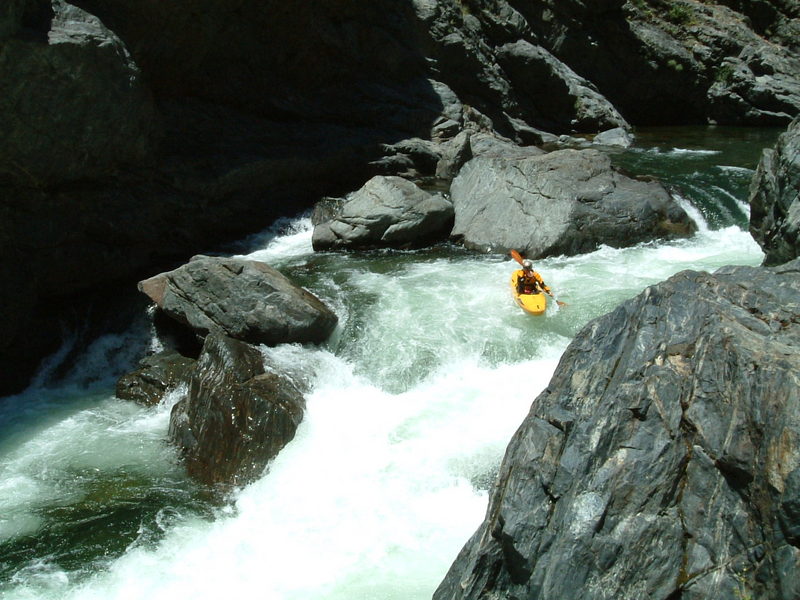
Above 1,500 cfs this becomes a dangerous river-wide ledge hole. Scout on river right by exiting boat into shallow water and scaling granite cliff (5.3). The portage is also on river right and requires team work to pull boats and paddles up the cliff. Rafts can line down the right. The rapid seems to have changed somewhat for the better in recent years (2007) and there is a more pronounced tongue hard right and less of a leftwards typewriter effect afterwards.
Five Alive

Class: IVDistance: 3.7 mi
Rapid
Five Alive

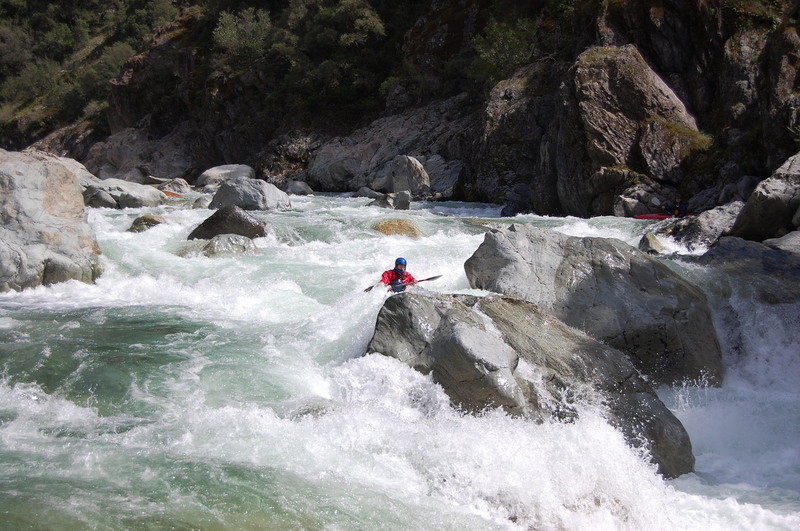
Always a favorite of most boaters, five alive appears to be dramatically changed as of 2006 and somewhat simpler though no less fun. The river suddenly steepens considerably, dropping to the left and forming giant breaking waves
Dominator

Class: VDistance: 5 mi
Rapid
Dominator

Dominator is the last of the big named rapids in Giant Gap, and at this point the canyon is already opening out from the cliffed out narrows of the inner gorge. It starts with a busy boulder garden with most flow trending center and left. Sneak routes appear to the right and can be used but have significant pinning potential. Following the main flow left leads to a commited eddy on the left that can be used to scout the final large drop. From this eddy split the two large boulders center in a steep banking hard left turn. More timid boaters are advised to scout immediately right rather than entering the initial boulder garden.

Pinball

Class: IV+Distance: 14.31 mi
Rapid
Pinball

Pinball lurks at the very end of the Giant Gap run, ready to catch the tired and weary after the seemingly endless miles of class II/III. Its geology and nature is similar to that of downstream Chamberlain Falls than the major rapids of Giant Gap. Catch the last eddy on the left as the channel becomes obviously constricted by large boulders and pick your line. An ugly looking cave lurks under the boulder top right of the rapid.

Take Out

Distance: 14.5 mi
Take Out

The take out of Giant Gap is the Auburn SVRA Mineral Bar campground and river access point on Colfax Iowa Hill Road. It is also the put-in to the downstream Chamberlain's Falls section. A California State Parks day use permit is required to park here, available at the bulletin board near the parking lot or from a ranger.


A quick lap in the California sun.

Cool little January adventure. Looks like we struck a good weather window, making the hike pleasantly cool (35 F). At takeout the Mineral Bar stick was about 1.5, which I believe correlates to 900 cfs in the gap? The preceeding rainstorm didn't bump flows as much as we wanted, but still fun to get out on this little adventure. At this flow, I would agree with A Wet State in that it's mostly IV with a few IV+ rapids sprinkled here and there. Certainly less pushy, but also very much boney in some key rapids.

New piece of wood in the 'warm up' gorge, second drop on river left.

Total about 4.5 hours of paddling. Hike was about 50 min to an hour, putting on around 11:30. We met at 9am at Mineral Bar and fortunately had a shuttle driver to bring the rig back down from put in.

https://youtu.be/4NuwUMrVQ5s

The put in for Giant Gap includes a 1700 ft descent from Euchre Bar Trail Head over a distance of one and a half miles. In layman's terms; it’s steep! This trail I’m sure is a jaunty day hike down to the bridge where sweaty poison oak covered enthusiasts can jump into the ice cold deep green pools of the North Fork. As a raft put in though, it is a bit unconventional. The average river user must imagine wide open cement parkways gently sloping into sparkling waters on a hot sunny day at the “boat ramp.” Nope. The reality is that the Sierras are well known amongst the whitewater community for involving access points that are more likely to destroy your sled than the rapids are.

Wait, I thought we were going boating, not sledding? There are multiple schools of thought on how to get a raft down a trail, all of which we have tried, none of which are great. If the trail were shorter or wider, we could carry the raft inflated. Although rafts are full of air, they are surprisingly heavy! The AIRE Sabertooth my partner and I R2 (one raft, two paddlers) is 75 pounds and that’s if it’s dry, plus our kits. For a one day trip without overnight gear, my paddle partner and I are each looking at carrying half our bodyweight to get on the Giant Gap run. Gravity is helping here, so one idea is to sled the weight down the hill on a toboggan. The record setting snow year manifested on the retail front as the great toboggan shortage of 2023, but after some creativity, our crew found one and we decided to use it for the bigger yellow raft. The hardshell kayaker also chose the sled technique, setting up a standard stern to bow leash system to control the descent.

The sled worked until it didn’t, which was less than a quarter of the way into the hike. The blue plastic cracked, then broke after hitting the sharp rocks in the first portion of the trail. (We should have carried over the road bed and then dragged upon reaching the softer trail.) We quickly reevaluated the situation and decided to go caveman style, which obviously means dragging two sticks under the load. This worked and got our buddies’ yellow raft the rest of the way down the mountain. At the river’s edge we discarded the sticks back into the forest whence they came and smashed up the sad blue sled, bagged it, and jammed the remains into the bottom of the raft.

The best alternative to gravity assisted drag sledding is to pack in the boats on our backs. The advantages here are mostly for the boat’s sake. You can imagine what those sled shredding rocks would do to an inflatable craft! The problem with back packing the raft is its bulk and weight, finding a pack that can accommodate such an awkward load has always been an issue. We have tried external frame style hunting packs, but the bulky external frame is a hazard while in difficult whitewater, getting chundered in a hole or flipping off a rock. Stashing a sled in the raft is also not ideal. NRS makes a pack that is meant to carry a dry bag, so we tried that last year but the straps were too short and the load wobbled and bounced, destroying our knees and my will to live. It also fell apart at the stitching and needed to be strapped back together with cam straps. I don't think NRS makes it anymore. For Giant Gap the best method we have found is a pack made by Six Moon Designs. The Flex pack is meant for packrafting. Technically, we are packing a raft; which surprisingly does not equal packrafting, which is obviously its own sport. This pack solves several of our problems, it is small and soft enough to stuff inside a drybag and strap to the back of the boat for our day on the water. On the trail, it has stabilizer straps that keep the load close to your body and extra long load straps to circumnavigate our girthy boat. The hip belt and shoulder harness are padded out and comfy like a traditional through hiker pack. We didn’t try out the fancy water bottle holders for fear of adding any extra weight to the unsightly load. Six Moon Designs gave me a few Flex packs to try out with the heavy load, so a big should out to their product!

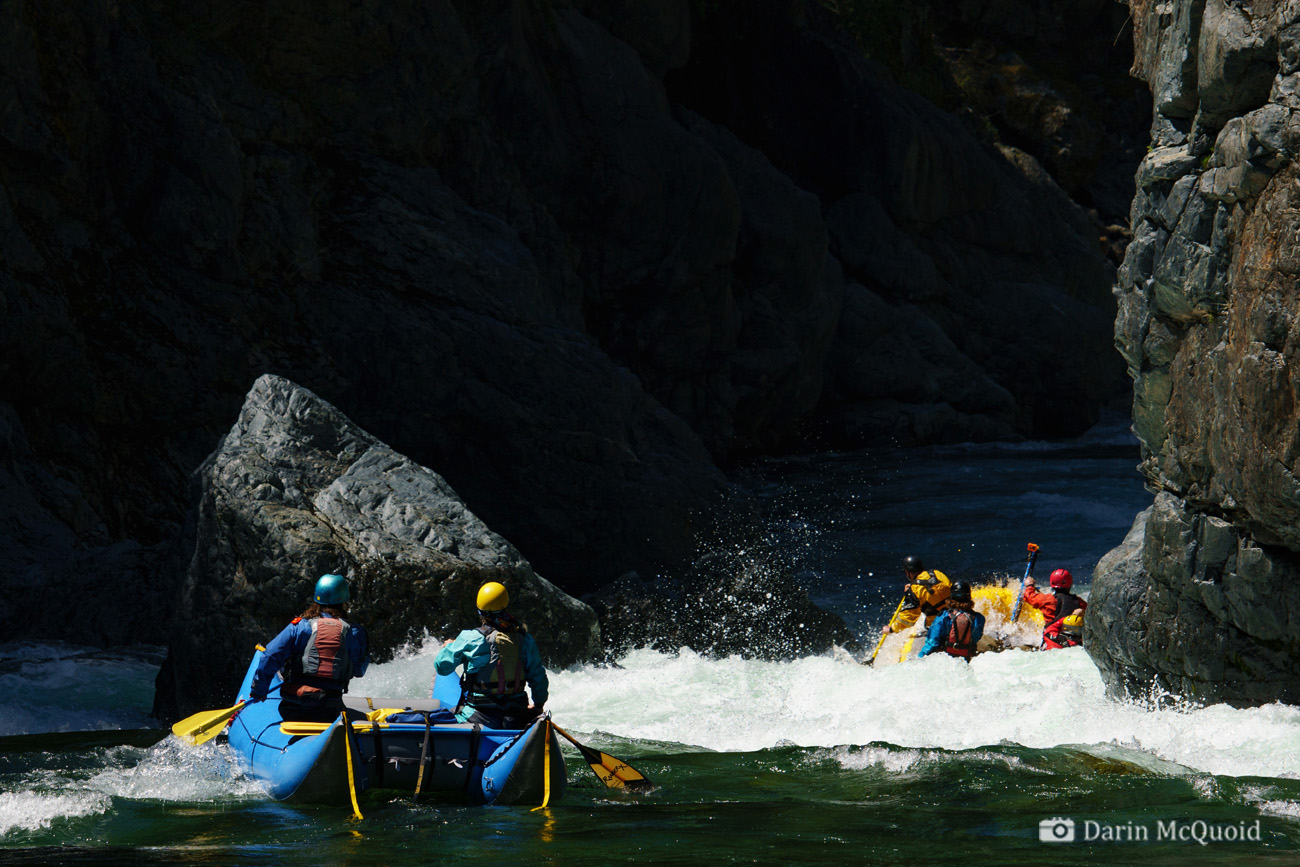
Once we get to the river, all the gear explodes into brightly colored piles of rubber as we begin to inflate the rafts. We shimmy into drysuits, double check hemet buckles, and push off into an adventure. Downstream we nervously await my favorite rapid of the run, Nutcracker. The R4 team in front of us disappears over the horizon line into shadows between two vertical walls. They get pushed into the right wall at the top so we enter more center. We drop in next and I say “we might want to square up to that one!” There is an enormous left hand lateral in the slot at our juicy flow of 1600cfs. We crash through and are lifted high over the crest, skipping over the last hole and through the narrowest point at breakneck speed. We are all smiles, whoops and hollers as the crew makes it through successfully. The best feeling is right there with our friends, knowing we have a whole day of river adventure ahead.

In conclusion: last year we packed in rafts at 1350 after a rain event, this year at 1600 snow melt felt significantly more cushioned out and was an easier flow for a raft. Five Alive had the center seive pile covered up enough that water was not pushing into it as much. Dominator had a lot more water moving right of the huge feature at the bottom. At lower flows it was difficult for a raft to climb the hill of water to make the left to right move. I prefered the higher flow, and can confirm (for rafts) that the hole at the bottom of Locomotive was not bad at all. Some of the most retentive holes were the 2 rapids just before the waterfall lunch spot. You want a crew with a class V skillset due to the remoteness and endurance aspect of the run as well as for the Dominatrix into Dominator section, which all ran together (with small eddies) at the moderately higher flows.

IB
Ian Buckley

Mar 25, 2007


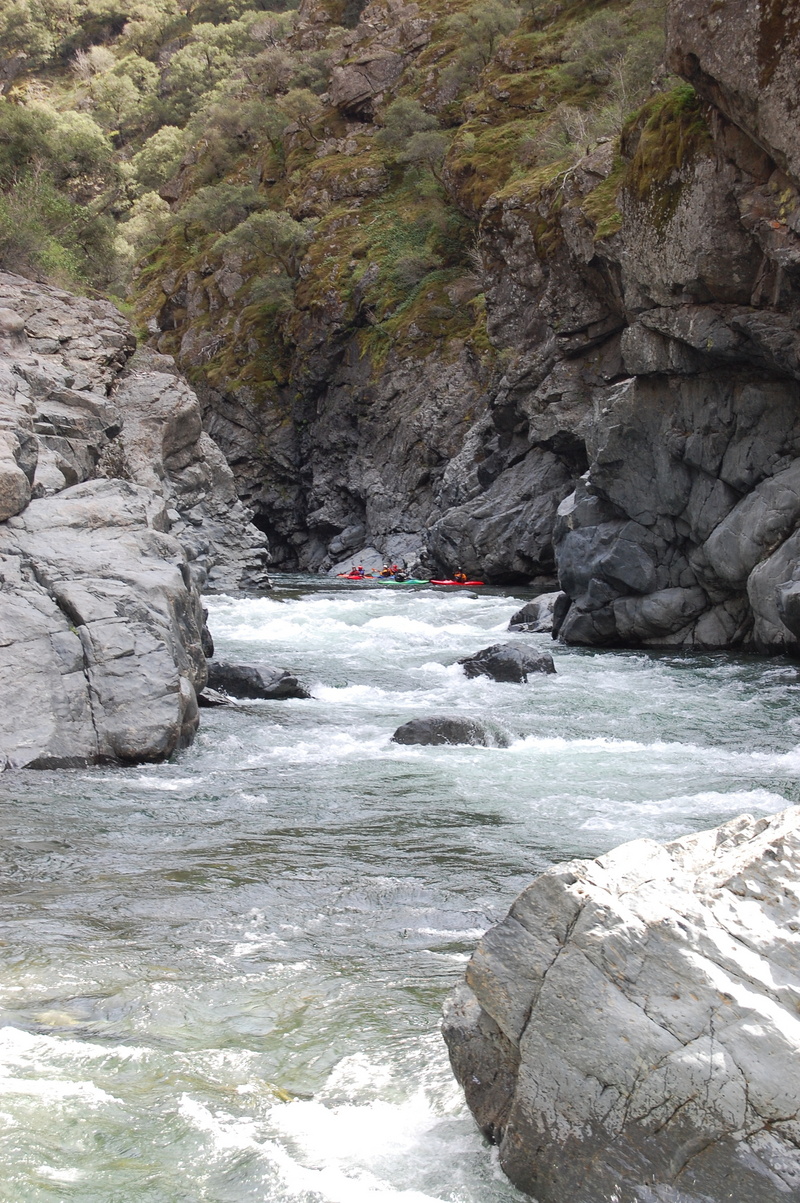
View upstream of easy water between Nutcracker and Locomotive in the narrows of Giant Gap
Ryan McGrath running the right side, Locomotive Falls, NF American
Keirith Snyder running Locomotive Falls, NF American

Macy Burnham sending the infrequently run and super sticky left side of Locomotive Falls, NF American

?
Untitled

Mar 25, 2007


Carlton about to enter the crux move of the meat line, Dominator, NF American

IB
Ian Buckley

May 4, 2004


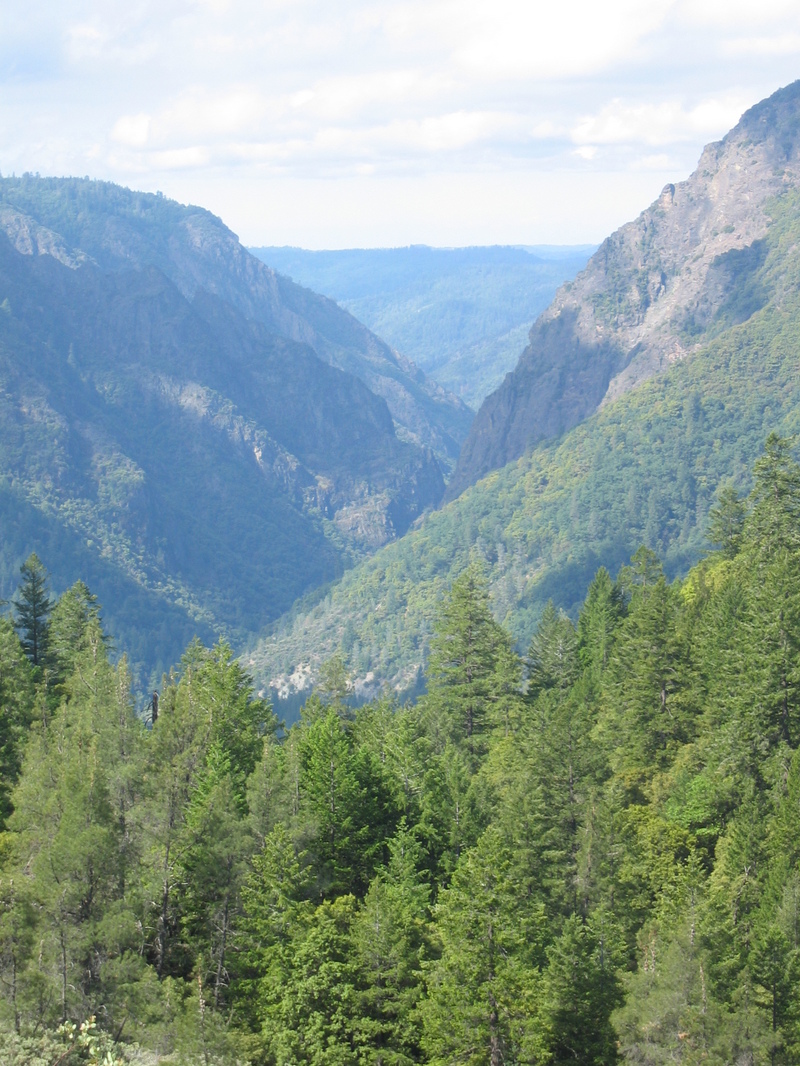
Giant Gap seen in the distance from putin trailhead parking

KE
Kirk Eddlemon

Jan 1, 1900


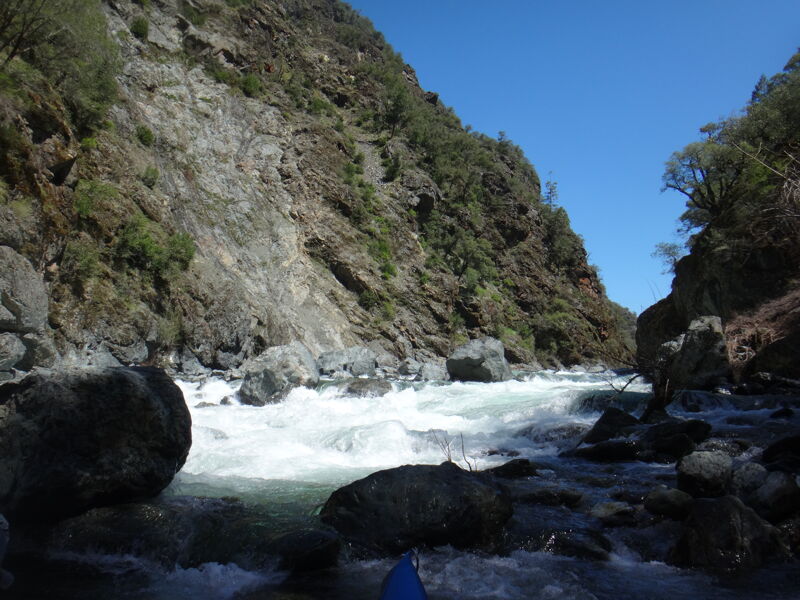
A beautiful shot in an amazing canyon