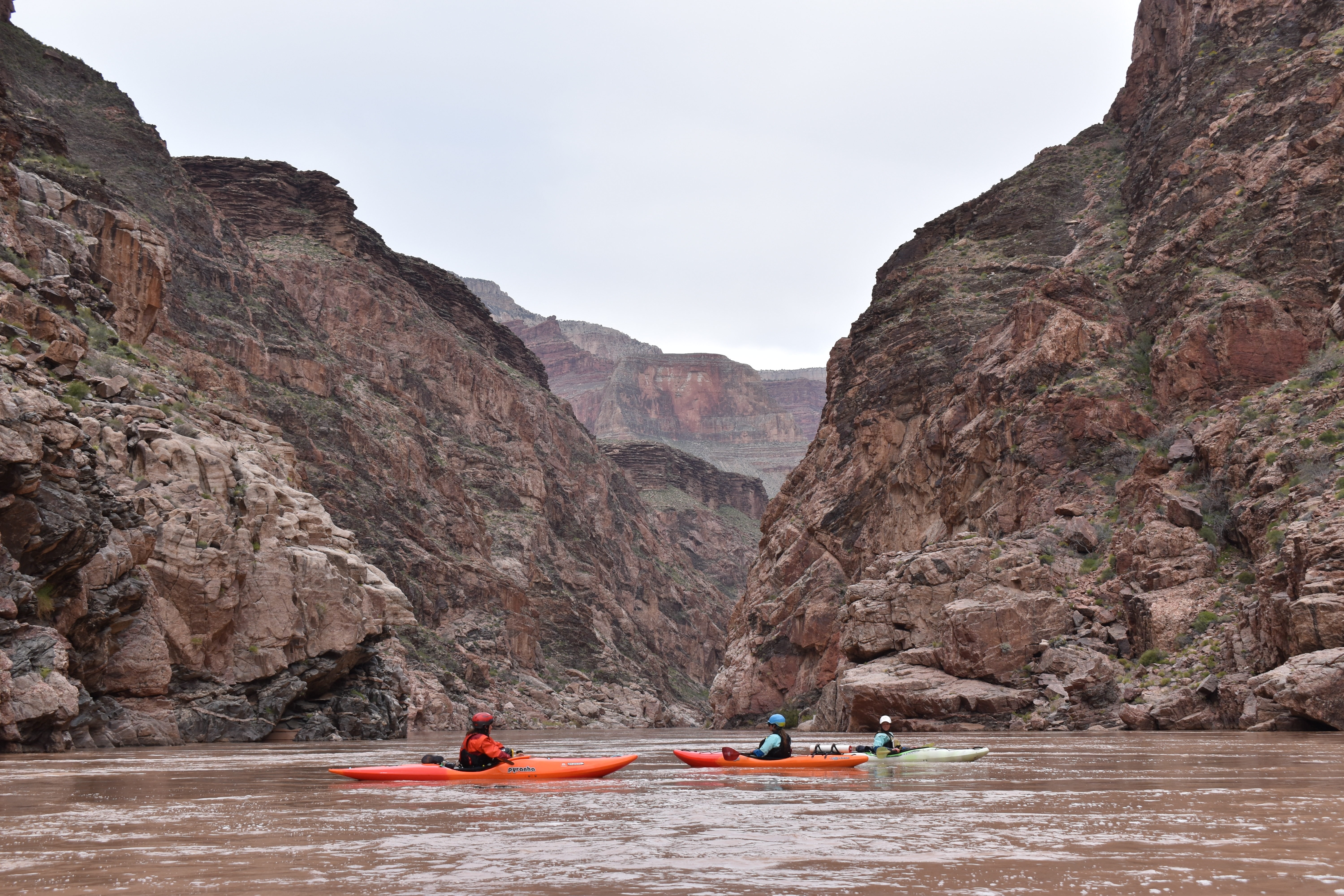
The Colorado River has been over-allocated and mismanaged for more than a century. Known as the hardest working river in the western US, the Colorado River flows from Rocky Mountain National Park in Colorado to Mexico where it gets sucked dry before reaching its mouth in the Sea of Cortez. The basin provides drinking water to over 40 million people, including seven states and two countries. On its journey downstream, the Colorado River and its tributaries create some of the most iconic whitewater and multiday river trips in the country and sustain life for a network of critical ecosystems in the arid southwest.
Today, the basin is at a turning point as consumption in the basin continues to outpace declining water supplies. Federal water managers, basin states, and river advocates, including American Whitewater, have all been at the table, literally and figuratively, to have a say in what the future of the Colorado River will be.
In 2026, a series of water agreements across the basin are set to expire leaving cities, farmland, Tribes, and robust river-dependent economies at risk if stakeholders cannot come to an agreement. Throughout this decades old debate, American Whitewater has never claimed that river recreation is more important than providing clean drinking water, food, and fiber to people in the southwest and across the country. Our position is that water consumption needs to align with decreasing and unpredictable water supplies and that management solutions must consider the health of the river and its world class boating opportunities. From the Gunnison Gorge, Gates of Lodore, Gore Canyon, Cataract Canyon, and the Grand Canyon itself, there is an immense amount to lose if river recreation does not have a strong voice at the negotiating table.
Through 2026 and beyond, American Whitewater will continue to advocate for smart, science-based management of the Colorado River Basin that balances overall health of the river with the growing demands of the basin.