
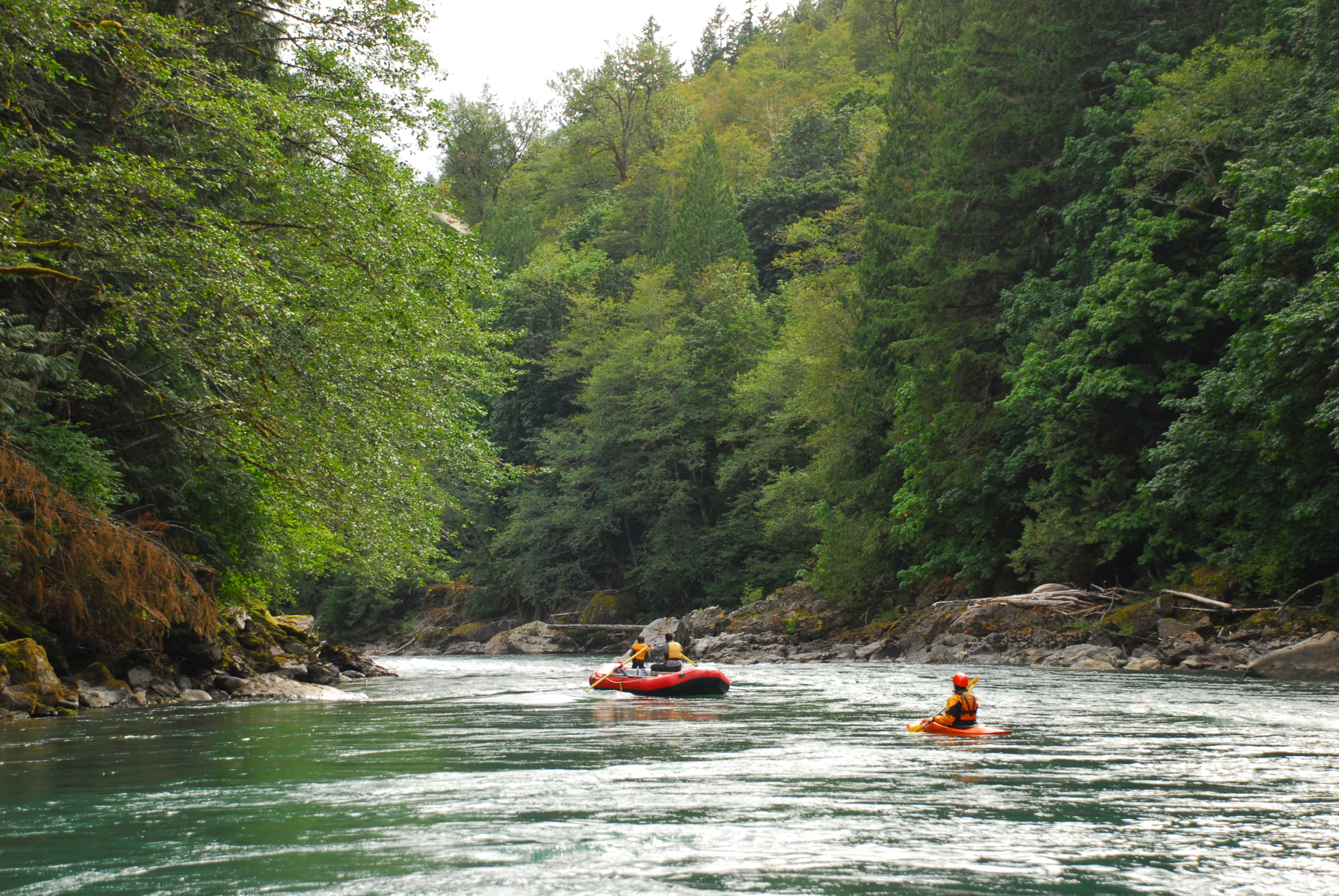
Beginning high in the North Cascades, the Skagit Wild and Scenic River winds down steep slopes, through forested hillsides and wide open valleys, eventually reaching Puget Sound. The rivers of this system – the Skagit, Sauk, Suiattle, and Cascade – flow through rugged wilderness, forestlands, rural communities, farmlands, and the cities of the lower Skagit Valley.
This river system provides exceptional year‑round paddling opportunities. Sections of the Cascade draw expert paddlers from across the country, while stretches of the Skagit offer eagle‑viewing and mellow floats suitable for the whole family.
Wild and Scenic Designation
In November 1978, Congress designated more than 158 miles of the Skagit system under the National Wild and Scenic Rivers System, followed by the designation of 14 miles of Illabot Creek in 2014. The designation was motivated by the river’s outstanding fish, wildlife, scenic, and recreational values, as well as active development threats, including a proposed nuclear plant on Kiket Island.
Improving River Access
Following the designation, the U.S. Forest Service published the Comprehensive River Management Plan (CRMP) in 1983. The plan included priorities for improving river access and recreation infrastructure. Over three decades, American Whitewater partnered directly with the Forest Service to implement many of those access improvements at sites including Marblemount River Access, Bedal Campground, Whitechuck River Access, Backman County Park Access, Sauk Prairie Bridge, and the Sauk River Boat Launch. Future opportunities remain, notably improved access on the Suiattle River.
Removing the Hazard at Bridge Drop Rapid on the Cascade River
American Whitewater has also played a key role in enhancing safety and recreation on the Cascade River. Bridge Drop Rapid was historically obstructed by debris from the old Lookout Creek Bridge, including steel salvaged from the failed Tacoma Narrows Bridge of 1940. The lodged steel created a massive strainer that made the rapid particularly hazardous. Beginning in 2000, American Whitewater and partners with the Washington Kayak Club educated paddlers and resource agencies on the hazard, ultimately leading to collaboration with the Forest Service and Skagit County to safely remove the debris in 2003. This effort reduced hazards while enhancing the scenic and aesthetic values of this Wild and Scenic river corridor.
Outstanding Resource Waters Protection for the Cascade River
More recently, American Whitewater led efforts to secure additional long-term protections for the Cascade River through its designation as an Outstanding Resource Water under Washington’s Clean Water Act rules. In 2023, the state formally designated segments of the Cascade River as Tier III Outstanding Resource Waters, recognizing its exceptional water quality, ecological values, and recreational importance. The Cascade River provides critical habitat for salmon, steelhead, and bull trout, contributes roughly 30 percent of the freshwater feeding Puget Sound, and supports recovery of the endangered Southern Resident Orca Whale population. Local communities also rely on the Cascade for drinking water, recreation, and sustenance. This designation ensures the highest level of protection for the river and safeguards its values for future generations.
Future Conservation Opportunities
While much of the system is protected, the popular whitewater reach from Goodell Creek to Copper Creek has not yet been formally designated under the Wild and Scenic Rivers Act. During the planning process for the North Cascades National Park Service-administered National Recreation Area, American Whitewater advocated for the Park Service to recommend this section for Wild and Scenic designation. This recommendation provides the river with administrative protection as we await the opportunity to formally include it within the Skagit Wild and Scenic River system.
Skagit Hydropower Licensing
American Whitewater has engaged in the relicensing of the Skagit Hydroelectric Project. Our interests have included restoration of flows to the Skagit Gorge with potential opportunities for whitewater boating, as well as recreational investments that benefit river-based recreation. We also support broader goals of restoration and instream flows that benefit the fishery resource.