
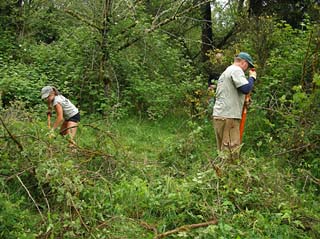
American Whitewater is part of a coalition of groups currently working to develop a stewardship plan for invasive weeds in the Middle Fork Snoqualmie River Valley. As part of this effort volunteers are needed who are willing to help map the location of invasive weeds for removal. Given the speed and regularity with which paddlers can monitor the river corridor, a unique opportunity exists for paddlers to contribute towards this effort.
Background
The Middle Fork Snoqualmie River Valley is one of King County’s truly wild places, with remaining pockets of old-growth forest, fantastic whitewater, and strong native trout runs. Land managers and local groups have worked for decades to protect the 110,000-acre valley and promote low-impact recreation. An effort to control invasive weeds in the valley is the next step in this long effort to protect the Middle Fork. With much “infrastructure” work accomplished, land managers and non-profit groups are now focused on long-term stewardship, including the Invasive Weed Control Project. This project will remove small infestations of invasive weeds from critical valley habitat before they become a bigger problem.
Invasive weeds are a problem in the Middle Fork, as on most public lands. Scot’s broom, herb Robert, Himalayan blackberry, butterfly bush, tansy ragwort, Japanese knotweed and other invasives are gaining footholds in the valley. However, the valley is in better shape than other lowland areas in King County, and with a coordinated community effort we can control all serious infestations before they rage out of control. By attacking the problem at this early manageable stage, we will save considerable future work.
How you can help
Volunteers are central to this community effort and paddlers in particular can assist with identifying locations of invasive weeds along the river corridor before they spread further. Plant specialists with the Mountains to Sound Greenway are currently mapping invasives valley-wide. Staff from the Greenway and the Cascade Land Conservancy are running professional and volunteer work parties, and land managers are assisting with fund raising and technical assistance.
We need three levels of volunteers to make a meaningful contribution to this effort: individuals who will participate in a training session and commit to assist with monitoring efforts in the river corridor, individuals who will both assist with monitoring and participate in volunteer events that include invasive removal, and individuals willing to take on a leadership role and represent the boating community as members of the community-based stewardship team forming to help direct the overall effort.
Work parties this fall, organized by Mountains to Sound Greenway and Cascade Land Conservancy, will emphasize training, including identification of both native and invasive plants. Volunteers will use hand tools to remove aggressive plants from locations downstream of the Middle Fork – Taylor River confluence. These projects are best for small groups of adults, especially those who are interested in learning more about native and invasive plants. Paddlers are encouraged to sign up for one of these events (Greenway volunteers sign up). Be sure to identify yourself as a whitewater paddler who recreates on the Middle Fork when signing up. AW will work with partner groups to determine the most effective way to utilize those who have the skills to conduct monitoring along the river corridor. Our goal will be to formally sponsor an event for paddlers in the spring.
Project Partners and Community Support
Primary partners in this effort include Mountains to Sound Greenway, Cascade Land Conservancy, US Forest Service, Washington Department of Natural Resources, and King County.
Financial support includes grants from King County Dept. of Natural Resources and Parks, New Belgium Brewing Company, the National Forest Foundation, and the Forest Service RAC program.