
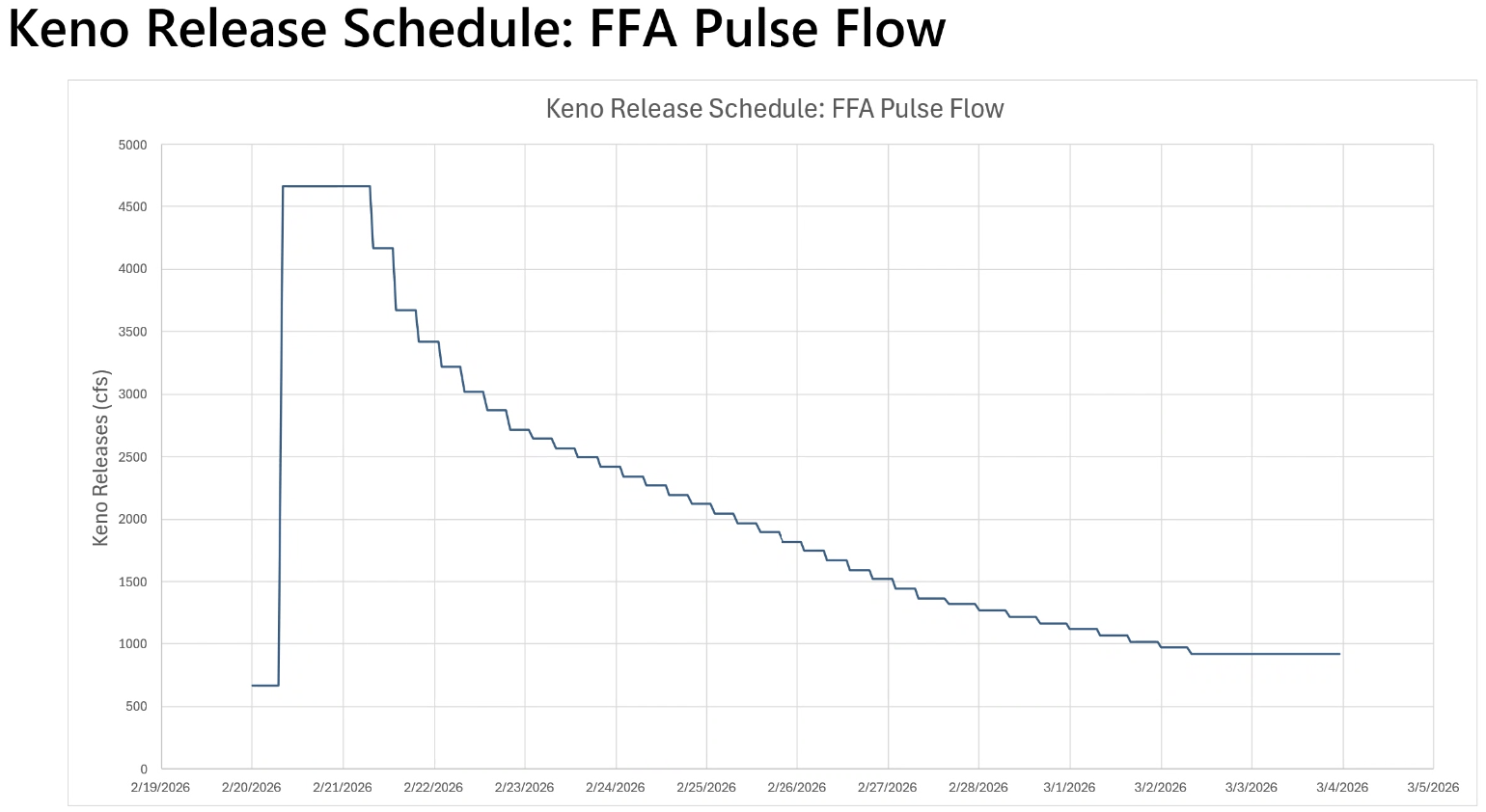
The U.S. Bureau of Reclamation (BOR) will conduct a sediment flushing release from Keno Dam near Klamath Falls, Oregon beginning February 20 around 6 to 8 AM. Flows are expected to increase rapidly by 4,000 cfs, followed by a gradual ramp-down to approximately 700 cfs by early March.
While this release will create high-water boating opportunities on the Klamath River below Keno Dam as flows ramp down, boaters and other river users should be aware of potentially dangerous, sudden increases in river levels on February 20 and possibly at unpredictable times during the subsequent ramp-down.
BOR is aware of public safety concerns associated with sudden releases from Keno Dam but is not incorporating the standard safety measure of gradually ramping up flows to give river users time to perceive rising water and react. At most dams, upramps are limited to about one foot per hour for safety. Instead, BOR plans to rapidly release approximately 4,000 cfs on February 20, likely causing about a four-foot river rise in little more than one hour below the dam. Greater increases are expected later in the day in downstream confined reaches, including the Big Bend, Hells Corner, and K’íka·c’é·ki Canyon runs. A winter storm is also forecast and may further elevate river levels.
⚠️ Boaters on the river and anyone along the banks may have little time to react to rapidly rising water when the flushing flow is initiated on February 20.
Rapid river height increases may occur through these boating runs:
- Keno
- Big Bend
- Hells Corner
- Beswick
- K’íka·c’é·ki Valley
- K’íka·c’é·ki Canyon
- Iron Gate
- Smaller increases on Mid-Klamath runs as far downstream as Seiad Valley.
Use extreme caution if boating, fishing, or recreating along the river during this period. Monitor river conditions closely. Flushing flows will reach Iron Gate Canyon in approximately 12 hours after release from Keno Dam and will reach Seiad Valley after approximately 24 hours.
Following BOR’s extreme flow fluctuations in 2025 — which caused stage increases of up to ten feet in one hour — American Whitewater has urged BOR to modify Keno Dam operations to reduce this serious public safety hazard. BOR is aware of the issue but does not plan to adjust operations to provide an upramp rate that allows river users to perceive and react to rising water. This approach differs significantly from typical operations at other BOR and private hydropower dams, which commonly limit upramp rates to about one foot per hour for public safety. Anyone near the Klamath River during BOR’s flushing flow event should remain alert, as dangerous increases in flow and river level could occur at any time with no warning.
Here is the anticipated ramp‑down schedule showing flows at the USGS gage below Keno Dam. These are target flows and may fluctuate with hydrology and BOR’s operations:
- 2/20/2026 – 4689 cfs (following instantaneous upramp on same day)
- 2/21/2026 – 3624
- 2/22/2026 – 2817
- 2/23/2026 – 2461
- 2/24/2026 – 2161
- 2/25/2026 – 1861
- 2/26/2026 – 1561
- 2/27/2026 – 1286
- 2/28/2026 – 1136
- 3/1/2026 – 986
- 3/2/2026 – 912
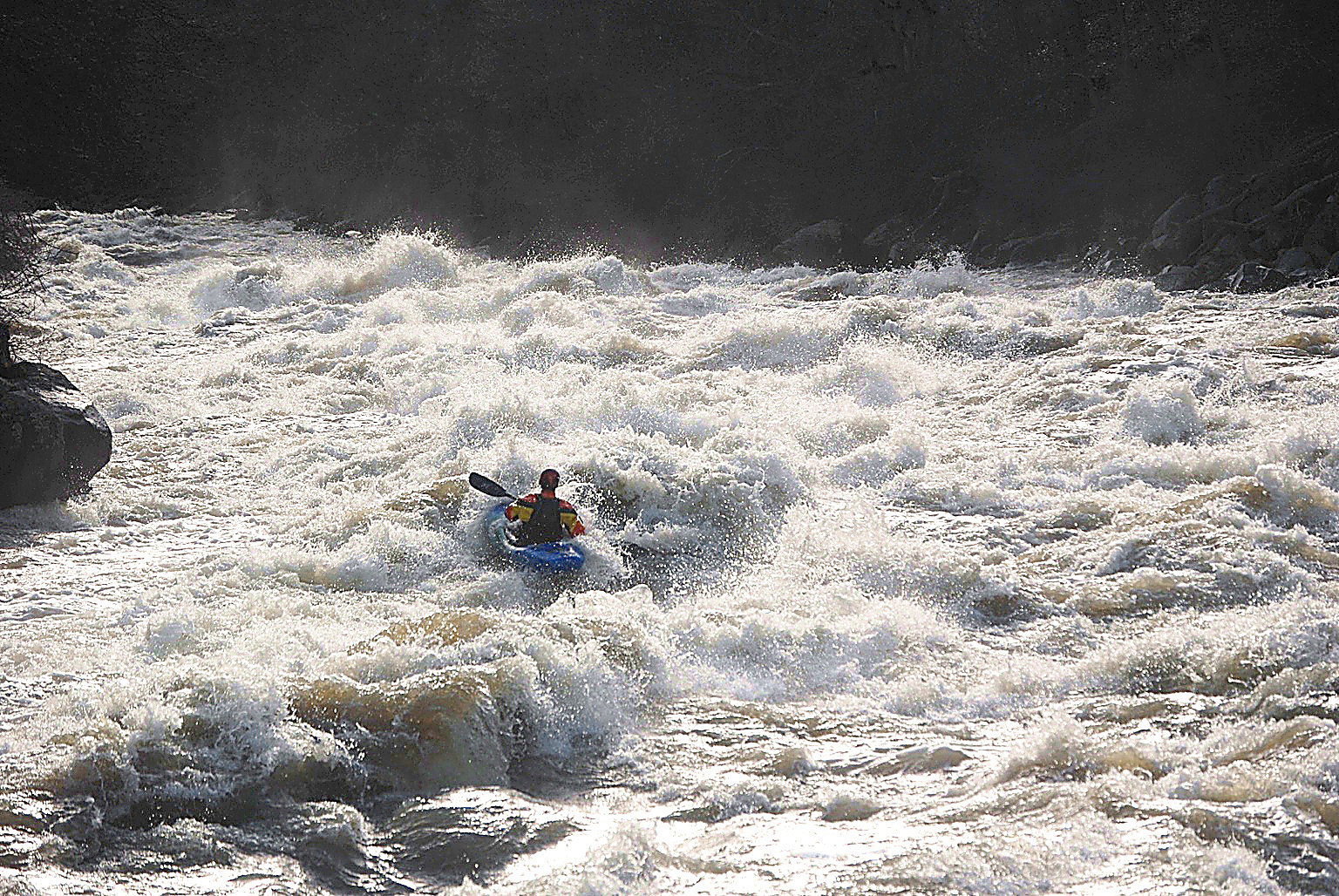
Article photo courtesy of Indigo Creek Photography.