
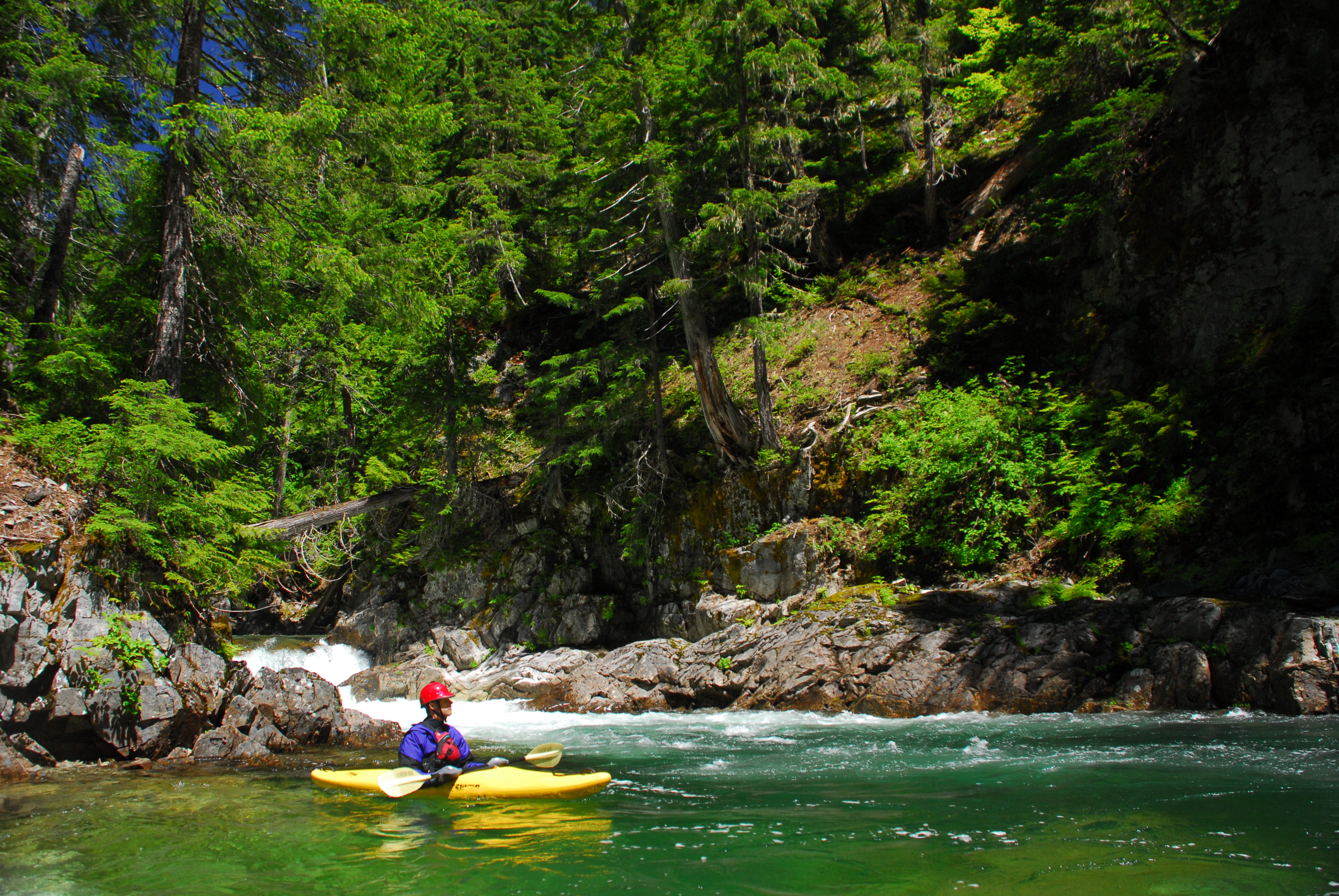
The Okanogan and Wenatchee National Forests encompass more than four million acres and are jointly managed with headquarters in Wenatchee, Washington. The rivers flowing through these forests are essential to the whitewater paddling community—both as close-to-home runs for Washington residents and as classic objectives for paddlers traveling from across the country. During spring snowmelt, these rivers run fast and cold, and the long sunny days characteristic of Eastern Washington offer ideal conditions for camping out of your rig and using bike shuttles to explore an exceptional variety of whitewater.
American Whitewater’s priorities in this region center on conserving rivers and surrounding forests through permanent Wilderness protection for headwaters and Congressional designation of river corridors under the Wild and Scenic Rivers Act. We also support strong administrative protections through Forest Plans that identify eligible Wild and Scenic Rivers, alongside other foundational protections such as the Roadless Rule and Northwest Forest Plan. In addition, we advocate for policies that ensure adequate funding for recreation sites and access roads relied upon by boaters, climbers, mountain bikers, hikers, and other users.
Wenatchee, Okanogan, and Colville National Forest Planning
Over the years, the Forest Service has attempted—with limited progress—to update the outdated 1990s Forest Plans. For river advocates, these plans are critically important because they evaluate rivers for potential Wild and Scenic designation. When a river is identified as eligible or suitable, it must be managed to protect its free-flowing character and identified values unless and until Congress acts.
In the 1990 Forest Plan, the Forest Service concluded that the Little Wenatchee, Rattlesnake Creek, Tieton, Naches, and Cooper lacked Outstandingly Remarkable Values of regional or national significance, and therefore were not suitable for designation. These conclusions need to be updated to reflect the uses and values of today’s whitewater boating community. Since 1990, creek boating has grown substantially, and many rivers once considered marginal or obscure are now recognized as nationally significant recreational resources. A fresh evaluation is long overdue.
In the 1990 Forest Plan the following rivers were deemed eligible and suitable for Wild and Scenic designation:
-
American River
-
Chiwawa River
-
Cle Elum River
-
Entiat River
-
Icicle Creek
-
Napeequa River
-
Waptus River
-
Wenatachee River
-
White River
The following rivers were deemed ineligible or not suitable:
-
Bumping River
-
Cooper River
-
Kachess River
-
Little Naches River
-
Little Wenatchee River
-
Mad River
-
Naches River
-
North Fork Entiat River
-
Teanaway River
-
Tieton River
-
Rattlesnake Creek
American Whitewater has consistently pushed for a full reevaluation of this list during any new Forest Planning effort. To be eligible for Wild and Scenic designation, a river must be free-flowing and possess at least one Outstandingly Remarkable Value (ORV). These values may include scenery, recreation, geology, fish, wildlife, prehistory, history, or other unique qualities such as hydrology, paleontology, or botany.
Forest Service direction makes clear that an ORV must represent a unique, rare, or exemplary feature that stands out at a regional or national scale—“a conspicuous example from among a number of similar values that are themselves uncommon or extraordinary.” In the recreation context, a river should provide opportunities that attract visitors from beyond the immediate region or offer experiences rare within the region.
Boaters should be prepared to document these values during future Forest Plan updates, with particular attention to how conditions and recreation use have evolved since 1990. The rise of creek boating is an obvious example, especially for rivers such as the Cooper and Little Wenatchee.
In 2011, the Forest Service released a Proposed Action that included a revised list of rivers to be considered eligible for Wild and Scenic designation:
- American River, Rainier Fork
- Cedar Creek
- Cooper River (Cle Elum River tributary)
- Deep Creek (Bumping River tributary)
- Devils Creek (Naches River tributary)
- Early Winters Creek
- Indian Creek
- Little Naches River
- Little Wenatchee River (including Lake Creek)
- Mad River
- Nason Creek
- Raging and Rock Creeks (tributaries to teh Chiwawa River)
- Rattlesnake Creek
- Silver Creek (tributary to the Yakima Rier)
- Tieton River, South Fork
American Whitewater was pleased to see rivers such as the Cooper, Little Wenatchee, Rattlesnake Creek, and Little Naches recognized for their unique recreational values. Unfortunately, soon after publishing the Proposed Action, the Forest Service halted work on Forest Planning. Nonetheless, we continue to advocate for long-term protection of these river resources.
One recent success was securing Outstanding Resource Waters designation for the Napeequa River through Washington State’s Clean Water Act authority in 2023. This administrative protection helps preserve the river’s exceptional values by safeguarding water quality, and we will continue pursuing similar opportunities for other rivers on the Okanogan-Wenatchee National Forest.